
"Good Luck" Why Not To Say It
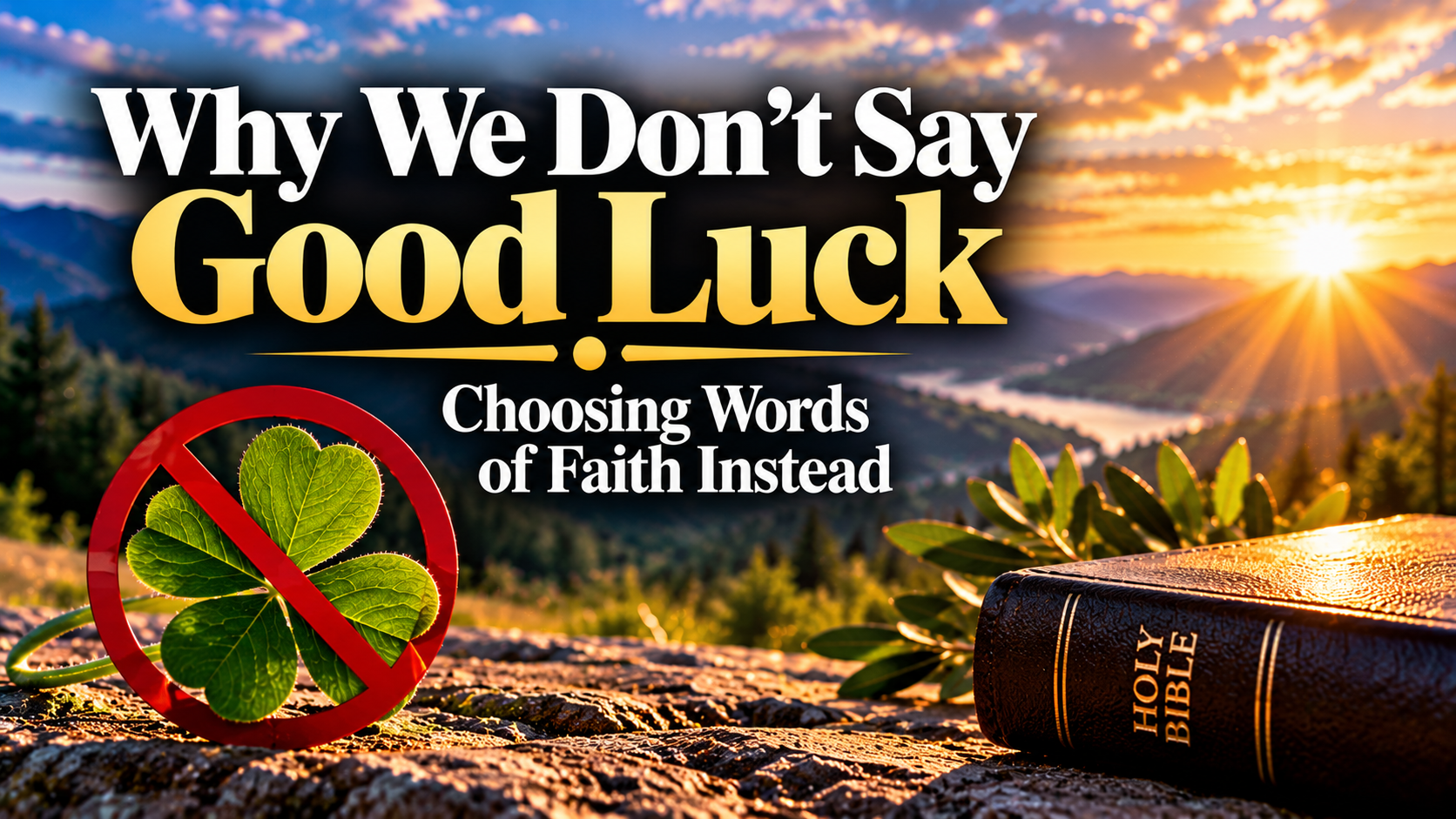
“Good luck!”
We say it when someone has a job interview, takes a test, or faces something important. Most of the time, it is simply a kind way of saying, “I hope this goes well for you.” I have said it myself without giving it much thought.
But recently I found myself thinking about the word luck and something I had studied in Scripture. In Isaiah 65:11, God speaks to people who had turned away from Him and prepared a table for Fortune and a drink offering for Destiny. The Hebrew names are Gad and Meni. Fortune was not merely a pleasant wish to them. It was something they sought and honored. Good Luck may have come from “gad luck” originally but generations later the meanings now has changed but the attribution can mean a lot as we watch our words and intention..
I am not suggesting that a person worships a pagan god every time they say “good luck.” Words can change in meaning, and our intentions matter. But the passage raises a question that reaches far beyond a familiar expression: When I do not know what will happen next, where do I place my trust?
That question touches more of life than we may realize. Some people read a horoscope for direction. Others keep an object because they believe it will protect them or bring them good fortune. Some avoid a particular day or number because they fear what it might bring. Often, we inherit these habits without stopping to ask what we believe about them.
I want to look at a few of these everyday practices—where they came from, what people once believed about them, and what they may mean to us now. My purpose is not to find fault with every harmless phrase. It is to examine my own heart. Am I looking to God for wisdom and peace, or am I quietly giving something else power over my future?
Where the article could go next
1. Seeking direction: Horoscopes and zodiac signs
What draws people to a forecast when the future feels uncertain?
2. Seeking protection: Lucky charms, horseshoes, and other objects
Is an object a keepsake, or am I depending on it to keep me safe?
3. Living with fear: Unlucky numbers and Friday the 13th
Have I allowed a date or a number to steal my peace?
4. Seeking answers: Practices meant to predict the future or contact spirits
Where do I turn when I desperately want an answer?
Halloween also drew from older seasonal customs associated with Samhain, so its history contains both pre-Christian and Christian strands..
I had read that visitors once demanded an offering and threatened a curse if they were refused. Historical documents. Early records tell that the Druid priests using this as an acceptance the night before the holy day to go out and go from castle to castle. If you were to take a young virgin, sacrifice her and render the fat of her body. And put it in a pumpkin and put it outside the castle. They would call “Trick or Treat” If they. Left the pumpkin with the sacrifice outside the castle there would be no mischief. But if you refused, then they would take this opportunity to use their spirits to haunt or torment the people who lived in that castle for another year. Of course. Through the years, that history has been turned into something that seems innocent. But the history still is there of that’s where it attributed from.
Generations later. What had been history? Has been retold and told until it is changed into traditions. People went ‘souling’ for food and prayers. Children went ‘guising’ for treats, and the later ‘trick or treat’ phrase carried a threat of mischief.
Instead, Let's choose words that build up each other and bring God glory in all we do and say.
Matthew 12:24b "For the mouth speaks what the heart is full of." NIV
Romans 12:9: “Hate what is evil; cling to what is good” (NIV). And
1 Thessalonians 5:21–22, which says to hold on to what is good and reject evil.
Matthew 6:33: “But seek ye first the kingdom of God, and his righteousness; and all these things shall be added unto you.”(KJV)
The Higher the Pedestal the Harder the Fall


 YouTube


