Faith After The Fall -Jason Dennen, skydiving accident survivor, faith after trauma,trusting God




 YouTube
Jason Dennen joins David W. Ebel on God Says YES! to share his Christian testimony of surviving a near-fatal skydiving accident and rebuilding his life. Before the accident, long workdays had crowded out his health, relationships, and sense of purpose. His prayer became simple: he asked God to lead him, and he committed to follow.
Jason recounts the accident, his frightening experiences during a coma, and the long recovery that followed. He describes how familiar Scripture and prayer helped him hold on to hope, how rehabilitation taught him to value small victories, and how sharing his story opened the door for others to share their struggles.
This conversation is about more than surviving a crisis. It is about learning to listen, bringing faith into everyday life, and discovering that your story can encourage someone else. Jason also shares his return to a triathlon and the message behind his book, 8 Days Till Sunrise.
If you feel overwhelmed, discouraged, or unsure of your next step, this episode offers a warm invitation: bring your honest questions to God, receive support, and take the next step that is possible today.
You can view his story and get the additional Devotional booklet at GodSayYesPodcast.com
David W Ebel: Hello and welcome to another episode of God Says Yes. I'm your host, David Ebel, and after 50 plus years of ministry, it is my passion still to reach people just as they are, flaws and all, and just love them like God loves them. No judgmentalism, just understanding. And to tell them that God loves them forever. They were created by him to love. He's always loved them. They can't even do anything wrong enough that he wouldn't love them. You don't fire God or run from Him. He's He created you to love and He's going to always love you. And that's what this podcast is. It's a it's an encouragement, it's an assurance that God does love you and He's got great plans for you, even when you struggle. And so that's kind of what we're up to today is we're going to be talking about how good how great God is for you. And to do that, I've brought him along one of my my guests. This is Jason Denton. Jason is a a a serious guy. He does he's a hardworking man and he loves God and we want to we we all are different who view and sometimes we I I get comments, well where are the working guys? We hear all the older guys, but where's the working guys? So I'm grateful that we have Jason today so he can he he can talk about about serving God while while he's at working age. So that for those that are listening, they can enjoy finding someone like them. So Jason, welcome. We're glad you're here.
Jason Dennen: Thanks for having me.
David W Ebel: You want to tell us a little bit about yourself?
Jason Dennen: Sure. I'm gosh, that's a big question to answer. So I'm a man of faith. I grew up on the East Coast in New Jersey for the first twenty five years of my life, moved out to Colorado to find some open space and to to spend time outside as New Jersey is super crowded. I grew up as in a family of seven people. So had plenty time caring for my brothers growing up as they were quite a bit younger than I than I am and relocated to Colorado and kinda life completely changed in terms of just a beautiful place to live, beautiful sunsets and climbing mountains and skydiving and racing in triathlons. I work in the financial industry. so so yeah that's a little bit about me.
David W Ebel: Well, it see that way we're not just talking heads. We're we're brothers who know each other. And now our guests know you too. And that's great. That's what we want. So we we always have four simple questions we ask each guest and they can personalize it any way they want. But we we like we like to hear from you because they hear me all the time. So first question is, Who were you before Jesus?
Jason Dennen: Wow. I I was I was blessed enough to be grow up in the church and our our family was I think one of the the things that my mom always made sure we knew how important it was to to go to church and and learn about Jesus and I remember one of the things she said early on, I I think I was probably in fifth or sixth grade, I said, you know, I want to play football this year, mom, and the games were on Sundays and they were part of were Sunday mornings. And she said, you know What time what time are the games? I said, Well, for this age group, it's like ten o'clock in the morning. And she said, Well, we don't choose football over going to church. And well, so from an early age, you know, knowing how important it was to to to be part of a church, faith, grow in our faith, go to Sunday school, go to church, learn all the lessons we need to know to to to start applying to our life, you know, from scriptures of the Bible to learning to pray. So so yeah, from a from an early age. Now it was about till seventeen that did I w you know, I was born again. so you know
David W Ebel: And and that's the second question. Okay.
Jason Dennen: Yeah, yeah. So
David W Ebel: When when you when you met Jesus, what was it like? Tell tell us your s your your your your getting to know Jesus story.
Jason Dennen: Yeah, so I I was in church and it was and I was part of a youth group and they were having a a a missions trip and they kept on asking me, Do you want to go to the missions trip the year this year? And I had never gone to it before. And one one day after church on a Sunday of course I was I was sitting there and I was just like I kind of felt a pull to kind of go and I I prayed, I said, Lord, do you Do you want me to do this? or are you calling me to do this? And the the answer I, you know, after praying and and and and being in the pew in church, I I said, yeah, I th I think is. And I and I you know, committed to go to the mission trip. And I think my faith grew from just knowing the lessons from you know scripture and how you should live your life to opening your heart to Jesus in a in a different way. And it's kind of a it was my decision at that point, not just, you know. family telling you you need to go to church every every week and learn the lessons, you're you're understanding at a a different level and it and it was it was it was, you know, you go through confirmation and things like that with the church, but it felt like it was my decision for the first time.
David W Ebel: And once you gave your heart to Jesus, that changed things? Tell us how it changed you.
Jason Dennen: Yeah, for sure. I think just trying to be thinking consciously in your mind that that you know if if you were that you were an example or you're you have to live your life as more of an example that you know it's more responsibility than you had before. You kinda you're representing faith in Christianity and Jesus, so you better act that way if you're if if if that's what you're saying you're representing.
David W Ebel: Mm-hmm. what one of the things I learned as a brand new believer was if you picture Jesus standing next to you, you don't live in fear next with him next to you. You want to please him. So you live your life in a way that if you're standing next to you, he'd be pleased with you. He'd be happy with how you speak and how you act and how you treat people. And that was so helpful to me to understand that it wasn't just Jesus up there somewhere, it was Jesus in here. And I represent him. And by having by picturing him next to me, it helped me keep in my mind that this isn't some concept. This is a reality. This is a person. And it was it's amazing for me. So then how did it change your life? Take your time on this one.
Jason Dennen: Well, I think like I said, it it it the way you walk into the world, the way you act, the way you portray yourself, the way you want other people, because I think the one thing that that you know when you claim to be a person of faith that people look at you and will question you in in ways and they'll hold you to a much higher standard than they'll even hold themselves. So you have to make sure you're representing that because otherwise it it's like the the weight, it's sometimes it's the weight of all of Christianity on you. Because if one person makes a mistake, they're like, Well, every Christian is like that. And and you have to realize that when you're interacting with people in in everyday life, because you can you could look at every interaction you have with people as moving them closer to Jesus or further away, and you it can have a power in the in a in a not a good way to push them back because they think all of Christianity is the way this person is acting. So you have to be really careful, I think, how how you how you
David W Ebel: Mm-hmm.
Jason Dennen: live every s single day of your life and how you interact with people and and realize that you are a representative of the faith and and make sure you're acting the right way.
David W Ebel: Okay, now but you've got a whole life now. From the time you get from then till now. How has that impacted your life? How d how do you live now?
Jason Dennen: Yeah, I th I think I think I I live in in a much happier way. I feel like that it's not just me, that you're never alone, no matter what you're going through. And and there are s have definitely been through some definite hard times in my life where I absolutely needed that. That I knew as someone was looking out for me and and guiding me down the path to get through this difficult time, 'cause there's so often times you you kind of have this tunnel vision and you're just like there that it feels like it's never gonna end. when you're when you're in it.
David W Ebel: Yeah. Mm-hmm.
Jason Dennen: and the reality is there is an end, but when you're when you're in this difficult time or trial that you're living through in your life, it feels like it's never and it's gonna last forever. And you know, that's when you need guidance the most and that's when you need that that the understanding that you're not alone and it's not gonna last forever. And God has a plan for your life beyond the plan you understand at the time when you're going through it, because you certainly don't have the the the wisdom or understanding of where this is going and you have to trust
David W Ebel: Mm-hmm.
Jason Dennen: it when you're going through that tough time. That's like God has a plan. This isn't your plan that and what if you would have picked that yours that you're going through at that very moment. But you have to be patient and understand that eventually there's going to be an answer to the, you know, the trial you're going through.
David W Ebel: Well he says they'll never leave us or forsake us. He'll be with us always. So you know God is God is so patient. He he doesn't need a watch because he is time. So sometimes the reason why it's frustrating for us is because we we'd like we we live in a microwave world, thirty seconds being we want it done. And life isn't it never was a mic a microsecond thing. It you know, it was whatever time it took. And God is there for all of that, those mountaintops that you That you enjoy and and then those difficult times when when it reminds us how much we need God. And to know that we can come to Him when we need Him, and He'll always be there. We're not we're never abandoned, we're never alone. So can you give us an example of how God has helped you through a struggling time?
Jason Dennen: absolutely. I would say the toughest thing I ever went through just happened eight or eight or nine years ago. And at the time I get a promotion at work and I'm working thirteen or fourteen hours a day. I didn't realize that w is what it was gonna turn into. And I'm very good at being concentrated on getting things accomplished. And sometimes that can serve you and sometimes that can destroy you. And at the time I didn't realize the difference. I just knew one speed ahe you know, going ahead ninety miles an hour. And after a couple years of working all of those hours, I realize I'm sacrificing everything in my life for this job and I'm getting through it, but like everything else is on pause in my life. And you know, you wake up one day because I knew things weren't going well because it's just like I'm stressed out. You know, I see this tight have this tightness in my chest all the time and my health went from, you know, Top 1% of people on earth when I was racing Iron Man triathlons to, you know, I gained a lot of weight. I'm pre-diabetic and pre hypertension when I go to the doctor. And I'm just like, things are things aren't going so well. And I was like, I don't know if I can keep going this speed keep at at this pace anymore. I'm just like I'm just overwhelmed and completely stressed out. I can't sleep more than a couple hours at a time. I wake up and I'm just staring at the ceiling and just overwhelmed. And you know, every day I would pray for to God, I said, Lord, give me strength to get through today. I would say it always worked, because I always got through today, th the day, and and but the the reality was I wasn't being honest and the honest truth was I was lost and I needed help because I was on this earth for more than w I was doing at that time, which was nothing but working, and that was it. and I said, Lord, if you if you lead me, I'll follow. And I would say it's the most powerful prayer I had ever prayed. And I had no idea the power of that prayer, because it took a little bit of time to understand what happened. because it was about three weeks, and I was kind of patient after I s you know, prayed that prayer. And then three weeks later I was I was skydiving and I was coming for for a landing on a field I had landed on hundreds of times before, and then all of a sudden a huge gust of wind comes off the mountains, picks me up, and slams me through a fence on the side of an airplane hangar at thirty miles an hour.
David W Ebel: Ouch.
Jason Dennen: Yeah. So I hit the building and my body started shutting down. eventually I'd find out that twenty bones were broken, three organs had to be fixed, and then my heart I hit the building so hard that my heart was displaced from the left side of my chest to the right side of my chest. It broke through the sack that it normally sits in and was all twisted up on the right side of my chest. So my body was shutting down and I was essentially dying. there. People ran over to me because they were about seventy-five yards away or so packing their parachutes for the next ride to altitude. So they
David W Ebel: Mm.
Jason Dennen: run over and they're trying to figure out how I am. Body parts and bent in directions they ordinarily aren't bent in. Blood coming out of my mouth, blood coming out of my nose. And they try to assess how I'm I I am. And they say, Jason, how are you? And I said, Don't call anyone. I'll be okay. Just give me a minute. And they kind of start looking at it. Yeah,
David W Ebel: Ha ha ha.
Jason Dennen: they start looking at each other and just like, did he just really say that? Now this was told to me afterwards because I was in I was completely blacked out when I said that. but I would say you default to your foundation that you've built when you're in your time biggest times of crisis. And part of that foundation that I had built through climbing mountains and skydiving was that you you fight to the very end, no matter what. and you don't know what's possible or or what what's what's gonna happen to you, but you absolutely fight. And I went into fight or flight mode and that was just, you know, take one breath. And then we take one breath, try to take a second breath. And I wasn't consciously thinking that 'cause I was completely out and blacked out. It was just my body took over and said, take a breath. And luckily they didn't pay attention to what I said and they called nine one one 'cause they knew waiting another minute was not going to help my situation. So the Flight for Life helicopter comes, picks me up, and flies me to the nearest level one trauma center for life saving surgery. And that's where they found that my heart was on the wrong side of my chest. So they immediately put me into surgery to save my life. and they told the doc the doctors told my family after they're done with the surgery that they had never done the surgery on anyone before because no one ever makes an alive when their heart moves from one side of their chest to the other. so this was the first for them and for me.
David W Ebel: Uhhuh. It it's like God just took your heart and said, I'm gonna protect this right now.
Jason Dennen: Yeah. Yeah. And so they put me into they intubated me into a coma. And let's say when you're in coma, you don't know you're in a coma because I just hit the building, blacked out, and all of these images start coming in and and they're basically like nightmares. And they're all similar in that there are people with me. I know I'm in bad shape. I know I got I hit the side of the building. I needed help. The people with me were unwilling to help me and they were leaving me to die. And I was indirectly being asked, do you really want to live? and if you live, do you really want to go back to the life you were living before this accident? And at first you're just trying to fight to survive because you don't know where you are, what's going on, you you don't understand any of this. You're just really stressed out and trying
David W Ebel: Mm-hmm.
Jason Dennen: to figure out what what are you supposed to do? And then the biggest part of the stressful situation, you know, as like I said, I asked God to lead me and he would I would follow. And he started s speaking to me in scripture, things that I understood that I had grown up with. And you know, he he's explains to me that all these nightmares are temptation and you won't be tempted beyond what you can bear. And he he'd show you a way out. So in this really time of not understanding what was going on or what I was supposed to do and how do I fight this, what I started to calm down. Because it's like, okay, this is w this these nightmares are just temptation. and I need to fight through that temptation. And you kind of think of, you know, Luke chapter four, you know, when Jesus goes out into the wilderness, no food for forty days, and is tempted over and over again by Satan. Of course, he comes out and is tempted three more times. You know, and and part of that is, you know, no matter how bad a situation you think you are going through, there's someone
David W Ebel: Mm-hmm.
Jason Dennen: Who's far more important than you, that has been through something far harder than you. And if he's your ultimate example and your Lord and Savior, you don't give up just like he didn't give up when he was constantly tempted and came out of the 40 days and was tempted again by Satan. And he says, Well, well, the message to me is, well, continue to fight. And you've already been promised there's a way out. You're not sure where the way out is now. You're not even sure how to get out of this, other than you fight through the temptation and don't give in. because I would say the temptation is it it doesn't come to you when you're strong, it comes to you when you're weak, and it's sh and it's shown to you in a way that it seems like it's gonna make your life better if you give into temptation. You know, for me it's like, well you're not gonna have to feel pain anymore if you just give up and let yourself die. You won't have to deal with your uncertain future of what whatever that may be if you just let go and die. and but I knew that wasn't right. I knew that was you know some the temptation go don't worry just give up you don't have to deal with this anymore and that's I knew that was wrong that and that wasn't the right way to live and you know Luke chapter four is a perfect example of like keep on fighting don't give in to the easy way out so and then you know it kee God keeps on talking to me and says you know trials we live through are here to test our faith and develop our perseverance says okay this is this is a test of my faith What I said and what I prayed about weeks earlier, was that real, or was those were those just words, or are you gonna really live by it? And are you really gonna allow God to to lead you? And are you really gonna follow even when it's not easy and we when it's difficult and you're not sure where it's gonna lead? And so I just keep on fighting. And it was like and the and the nightmares went from For instance, the first one, it was just like two hospital personnel were picked me up like I was like a log. and they brought me out to the desert and they put me down to the desert and they said, you know, that we can't help you. And I couldn't understand why they didn't want to help me, and they just turned around and left and just left me laying in the middle of the desert by myself, and I couldn't walk, I couldn't move. And then they started getting more and more aggressive. It's almost like the sense of, well, this first nightmare didn't give enough temptation for him to give up, we're gonna make it harder and harder and harder. And they became more violent and it, you know, it came to the point where they were trying to end my life. And they told me they were going to end my life. And but what the reality was is I wasn't getting weaker as I was overcoming all this temptation. I was getting stronger. And it was just like we're gonna keep on, we're gonna try to end this guy. And if we get a little bit harder and we get these these nightmares, the the temptation a little bit harder, he's gonna give up and that's it. But I got to a point where I was just like, I'm so sick of all these nightmares, I'm so sick of all this negativity because it was all so negative all the time that you know, it makes you question, are you worth saving? And I said, It's time to get out of here because I was promised there was gonna be a way out. So for the first time in any of those nightmares, I picked my head up and I looked around because I was always kind of in this broken position, just like I I was on the outs in the outside world. And I looked up and looked around, I said, you know, if you're gonna kill me, you better do it now. Cause if you're not gonna kill me now, you'll have no chance later because I'm coming back from this and I'm coming back strong. And so first time I any vocal or any words came out of my mouth in any of this in this coma that I was in. And as soon as I said that. The nightmare went away. And then I start seeing this light shining in my f in my eyes. And I can't open my eyes right away because the bright the light is so bright. And it feels like someone's standing on my chest because there's so much pressure on my chest. And I'm still gasping for breath. I can't take a full breath. And I start to open my eyes and I realize really quickly that I'm in a hospital room. And the light I'm seeing is the is the sun coming through my window in the morning. And when I open my eyes, I'm startled because there's a guy in a white coat looking down at me, and and then I realize quickly that's a doctor, and it says DR period and some long name on there. And he and he's kind of over the top of me and he just says, You know, you're lucky to be alive. And I look at him, I said, I assumed he was somebody important if he if he woke me up in that way. And I said, Thank you for helping me. And I slowly reach out my hand and give him a high five. And he gives me this crazy look like high five. Apparently he doesn't get a lot of high fives from people that just woke up from comas, but like I was in a celebrating mood because I just came from such a horrible place. And and and I assumed I was back in in the in the in the real world at this point, or what I could surmise. and I and I'm and I'm just I'm just awake and I'm just like I at least I'm not in that horrible place I was before. I'm not sure what other tests are coming, but it was kinda like the first test was over and there's gonna be more coming, but I got through the first test. And so he quickly leaves and I'm and when I hit that building, I didn't really know what was wrong with me because I blacked out right away. And I'm kind of in shock and I'm looking down at my body and I see casts on both my arms and gauze on my chest and stomach and all these tubes coming out of my chest and stomach all draining blood and I see five IV bags hanging up and I'm just like I didn't realize you could have five IV bags connected to one person at once. I thought, you know, I thought it was like one per customer. and then there's all these machines encircling and you're just like what I didn't know what to ask anyone. I didn't know what to say and and and I prayed because that's I knew how to do that. That was part of the defaulting to the foundation of even when I was working all those hours, the one thing I did every day was pray. So I never lost that. And and I said, Lord, thanks thank you for for not leaving my side. Thank you for directing me and telling me exactly what I needed to do when I needed to do it. And you know, if you're wondering, I'm still following you, so please keep leading me. I don't I said, Lord, you know I lost purpose working all those hours for all those years. I know you say you must have saved me for some reason. So I don't know when you're gonna tell me, but please restore me with purpose. Give me a reason to be here again. Cause I right now I don't feel like I I there was a reason before the you know, before this accident and so for the next three months I basically just have to lay in bed and I can't move. And so when everything is like I When I was stressed before I'd go for a run or jump out of an airplane, it was a coping mechanism. And like all those things are taken away. And it's just like you lay in bed and you think about your life. And you think about where like how did I let it get to this place? Why I mean, i it it you just beat yourself up. Because one of the first things I I really regretted when I woke up from the coma is like I wasn't spending time with my family or friends and I was just working all those hours and and I l I lost focus of like well well why would you possibly work all those hours and what what benefit does it give you and you know I wasn't I could tell you what my priorities were or should have been or what I thought they were, but I wasn't honoring any of that. I was just like all those hours over and over and and and I got caught up in that. And you know that's that's real regret. And when you
David W Ebel: Mm-hmm.
Jason Dennen: when you when you're laying there, it's like there's no escape from it. There's no escape from yourself. Like there's no getting out and saying, like, I'll go for a run and not have to think about it for an hour. Well, like, I can't move anything except my hand like this. It's like the gift was I had to lay there and think about my life and how I was going to come out of this better than I was before. And what was the plan? Because I knew God had a plan because he saved me for a reason. I was like, I don't know what that plan is. Because this isn't the plan I would have chosen to smash the side of that building because it hurt way too much. but I said, I have to have faith, I have to lay here. You don't get an answer right away because I wasn't ready for the answer right away. If it was day one of waking up from the coma, I wouldn't even understood what the purpose was. I was like, you know, praying every day, think about your life. How are you going to rebuild yourself better? What are you going to do with this gift that was given to you? And It was hard because it because, you know, you beat yourself up or I beat myself up. I never thought about all the good things that happened in my life because I had a loving family and I I I didn't have a bad life. I went through a patch where I was, you know, I was pretty miserable, but it it's I I thought about all the things that I fell short on in life. And I wish I had done better. And I said, Well, I have a second chance. How am I gonna what am I gonna do with this? And and and you don't know all the answers at once. Well, I don't know. But and and you and you and I would resort to just beating myself up again and again and again. and until I guess I was ready to to to change that and then figure out how we're moving from beating yourself up to like what are we gonna do with this? And at my lowest, when I'm going through all that pain, they decide to send in a psychiatrist. And I figured that I had never been to a psychiatrist before. I figured they were gonna come in and and give me some tools to cope with what I was going through, you know, that you're gone through the toughest part of your life going through this accident. You're not gonna f you're gonna feel depressed, you're gonna go through questioning yourself and you it and but they didn't do any of that. The psychiatrist asked me how I was feeling. I said at that point I felt hopeless and helpless and and So then he starts naming off medications. Now, certainly not a medical expert, but I knew one or two of them, they were like really heavy hardcore mental health drugs. Not saying mental health drugs are bad in any way, but I knew they weren't for me. I was like, I was gifted to lay in this bed and have a clear head and think about my life and not be distracted by anything else. And I thought these medications were going to kind of sedate me and just, you know. Ma g give the doctor a an easy way to just he just lays there now and and he doesn't have to deal with anything. He doesn't have to feel sad, he doesn't have to feel sorrow, he doesn't have feel anything. but I that scared me to death. I when I first woke up from that coma, they had me on a lot of medication and I kind of felt indifferent about life. because of the medication. You know, it's like, did you want anything you know, my my family would be there, you want anything to drink, you want anything to eat? didn't care about anything. You you just didn't feel anything, except pressing that button every thirty minutes and you'd feel the the warm medication going through your body and making you feel nothing again. And I was like, if if I'm ever gonna come back from this or I'm gonna change who I am, you can't feel indifferent. I was like, I need to feel pain, discomfort. and I knew if I took any of that medication that I wasn't gonna feel that, or that's what I thought I wasn't gonna feel, and I that scared me. And so the doctor was always like, Do you wanna take this medication? I couldn't imagine why he was asking me this 'cause I'm I don't I don't know anything about these medications. And I said, Well, what are they gonna do for me? And he said, well, don't worry, they'll cut out your highs and lows. I said, Well, there aren't any highs right now, so they're just lows. But I was like, This guy's just taking a shortcut, you know? And I felt like he was tempting me to take the easy way again, just like those nightmares were doing. And So I said, no. This was a gift. And so I looked at him, I said, get out of my room and don't ever come back. And I, you know, I said,
David W Ebel: Yeah.
Jason Dennen: Room twelve doesn't give in temptation. If you if no one's told you that already, I'm telling you, get out. And he kind of got up, left, and I and I never saw the guy ever again. And so as I'm as I'm as he leaves, I'm by myself in the bed and and I'm super mad. And then I hadn't been mad since I woken up from the coma. And at first, I think I'm mad at him for trying to tempt me. And I realize I'm mad at myself because I let myself feel helpless and hopeless. And I start thinking about the parable of talents and the book of Matthew. And I was like, All you're doing is mourning the things you can't do and laying in this bed instead of using the talents that are given to you. You might not have all your talents at your disposal right now. But until you start using your talents and stop mourning the things you can't do and start using the talents you have, you're gonna be in this bed and you're not getting any better. so I'm laying there and the night falls, and I'm again I'm by myself, and there's just the beeping from the from the machines. And I start trying to figure out like, okay, well, like what what can I do? I mean, all at this point, all my all I could do is move my hand and My mind's finally clear kind of for the first time since the accident. All those medications had kind of drained out. And
David W Ebel: still.
Jason Dennen: and I was just like, At first I thought I was just gonna jump up out of bed one day and start walking when that wasn't at all possible. And I was like, You're not gonna fix this big problem in one day. You have to fix it one day at a time. And that took making effort to do something small every single day. And if you do it, it'll compound over time. And it'll get you better, or at least better than I was. I don't know where it was gonna lead. but one of the most important things happened that night was that I was laying there, I was thinking about the story of the accident. And until that, until that time, I would tell the accident every time someone would ask about it. And I probably told it 50 times at this point. And I kind of felt like a burden because it was reliving the hardest thing over and over and over again, hitting that building. It's like it would flash in my mind throughout the day, even when someone wasn't asking about the accident. But then I would have to tell the the story and I would never tell anybody no, because they they're interested in hearing about it. so it started to feel like a burden. And then that night I started thinking differently about the story. Instead of thinking about the way it made me feel, I started thinking about the reaction every time I told the story and what happened. Because I would get finished being like, I'm scared, I don't know what's gonna happen, I'm not sure I'm gonna ever gonna be okay again. And
David W Ebel: Yeah, that's funny.
Jason Dennen: then the person after I stopped talking. The person who I was telling a story to would start talking about their life to me, you know, the fact that they're in that hospital every day trying to help people, and you know, not everybody makes it out alive and it's such a heavy weight to to to bear for them. troubles with marriages, trouble with kids, their fears, their doubts. And I realized the story wasn't a burden, it was a gift given to me to connect to people in a way I could have never connected to before.
David W Ebel: Mm-hmm.
Jason Dennen: And I was like, this is a gift. given to me. And the thing about having this gift is it's like getting better from this accident wasn't just about me anymore and fixing me. It was like if I can fix me first, I could help other people. Because this was kind of proof that like just telling the story in a way opens up people to to to to talking about their most difficult time and maybe I can help them if I get through this. And I couldn't have understood it the same way unless I went through the toughest thing in my own life first. And then I would say like when you when you you have a purpose beyond yourself, you have strength beyond your own strength. Because now it wasn't just about can I get through the pain? It's like, can I get through the pain because I could help someone else on the other side if I get through this pain, but first I need to fix me. Because who's going to listen to somebody unless they fix the can fix themselves first? So after that night, everything changed because I said, Lord give me purpose, and all of a sudden he's just like, This is the purpose. And it doesn't give you all the answers quite at what you're like, Well, I'm not sure exactly how I'm gonna do with this, but but I have a reason for being here. He's starting to give me
David W Ebel: Exactly.
Jason Dennen: a reason.
David W Ebel: You you've got you've come through a lot and and I I appreciate your transparency. I I was born with birth defects and life was rough, but I finally got to the point I didn't want to live. Then I gave my heart to Jesus. And when I did, he gave me that purpose, he gave me that calling. And instead of me not wanting to tell my story, it became a responsibility, a good responsibility of honor to tell my story so that it would help other people in their struggles. And so I can identify with what you're saying. my story has changed not only my life, but thousands of other people's. And God's story in you is doing the same thing. Keep going.
Jason Dennen: So like I say, after that night everything everything changed. So the next day, so this therapist would come in every day, amazing therapist, but the pain she would put me through was just like off the charts. and she would move my arm and I had a cast or my wrist all the way to my shoulder. And she would move it an inch or two, and when she moved an inch or two, sweating through my gown, yelling out loud, I would get tunnel vision like I was gonna pass out all these spots in my eyes. And You know, before that that night that we just talked about, I was just like, I'm not sure I can get through this because I I just like if this is and that this is like the smallest thing they've done to me to move anything in my body. I was like, if this is like step one and the rest of my body still can't work, like how am I gonna get through the rest of this? But then after that night, it was just like, Okay, if I can get through today, I can get through tomorrow. If I can get through tomorrow, I can get through the next day, take the smallest little step you can. Because when you start building momentum, you're gonna be able to get through this and you're gonna be able to help somebody else. But first you gotta have to you you kinda have to make some s positive steps. And you know, I would I would get through that that therapy session that would last an hour and I would give the therapist a high five and she would look at me like same same look the doctor would give me where I wake up with the coma, like what's wrong with you? Why are you giving me a high five? 'Cause I was like, if you help me get through this. We can help other people outside of this room. Because I want her to buy into this isn't just about me. This is about all the people we can help. So no matter how loud I yell, just keep on moving my arm. I don't care what I say, because if you can help me get better, then we're gonna the when the rest of my body turns on, I'm gonna be ready for it. So so yeah, every day was just that pain over and over again.
David W Ebel: Mm-hmm.
Jason Dennen: And Eventually they cut the cast off my arms and I s I and I'm like all those little things I'm doing every day and going through that pain session, there finally looked like there was a a payoff to it. I was like, well now I could finally see my arms. They don't work too well, but at least I can I can I could touch my hands together for the first time, which I couldn't do when I had those casts on. And for the first time, I'm able to do something for myself because every morning I for breakfast I would have yogurt. And it was yogurt because I I I had no hunger and I knew I needed to eat to have calories to to help restore my body. And they would have to open it up for me every time and I could feed myself because it was just a spoon in there to in my mouth. And that the day after they cut the cast off my arms, they bring in my breakfast the next morning and I and they they they pick it up and are about to open it and I said, Let me try it because I want to see if all these things I'm doing every s single day are adding up to something. And it took me two tries to open the top of the yogurt. And then it was just like all these things are starting to do something's happening. And this was finally the first proof that I was able to do something for myself because I was basically not able to do anything for myself for all these weeks while I'm laying in that bed. and then they move me after two or three days, they move me to the fourth hospital and I get to take a shower for the first time. 'cause I had all these incisions on my body, they could I could never get wet. and they would just, you know, clean me off the best they could with like child wipes or whatever you call those things, wet ones. And so the first time I'm a s I'm in a wheelchair, but they're able to shower me off. and I'm so inflexible I can't even touch my hands to my head. But the nurse washes me and then then she puts me in front of the mirror. And I see for the first time my chest and the scars and everything, all the places where those tubes came out of my my chest and stomach draining blood. And I lost so much weight from laying in bed and all the trauma that, you know, skin was hanging off my shoulder. You could see every bone in my ribs right through the skin. And I look at that, I'm like, we're starting off from like nothing.
David W Ebel: Yeah.
Jason Dennen: And that was okay because I was just like, I can make all that muscle come back. I know how to do that. But I looked at myself in the mirror and it was the first time I had looked at myself in the mirror in a really long time. I don't mean, yeah, I'll you look at yourself in the mirror and fix your hair or whatever the case may be, but I'm talking on a level where you look into who you are through the eyes in a mirror. Because before that accident, I wasn't happy with my life. I didn't want to look in the mirror. I didn't want to admit to myself that I was failing because that was the reality. And it was the first time that I looked in myself deeply in the mirror for a long time. And I asked myself the question, I said, Are are you who you proclaim to be? And you know, I said I had faith. I said I believed in God's plan for my life. And that's easy to say when things are going well. It's hard. To live by those same principles when things aren't going so well and you're scared and you're not you're not sure where life's about to lead. and I say, if I live by those principles that I say I live by, I'm gonna be okay. If not, things are not gonna be good. And every day it's it's like something you can't you can't answer with words because those that's that doesn't mean anything. You have to answer with your action every single day and how you live your life. And so I would put my w my wheelchair in front of that mirror every single day and ask myself that same question. Are your actions following what you say you live by? And so I would I had to be accountable for what I said. and that was really when I started coming out of that dark place and recovering. and So the fur for so a couple of days into being in this fourth hospital, they they came into my room and I I I didn't understand why they didn't ha give me a goal yet of like, well how when I 'cause this is supposed to be the fourth hospital, the last one before they send me home. And they explained that to me. And I said, Didn't give me a goal. So these two therapists are standing in front of me. And I said, my goal is to walk out of this hospital on the last day. And then one therapist looks down at the ground and won't even look me in the eyes. And the other one has like a deer in the headlights look, like, what did this person say? And why did they say it? Because what they said was crazy. and I'm used to seeing those crazy looks from all those people at the hospitals because I would say something and maybe they heard it a million times before. People could. proclaim crazy things or what they were gonna do and what they were c gonna recover. but they the the the therapist looked at me and said, There's no way you're walking out of this hospital. You're you're going home in a wheelchair. That's what we're preparing you to do. She said in a very nice way. you know and I was just like that's not the plan. But I said I'll do I'll do whatever you say. we'll we'll we'll go by your plan. But I knew there was a There was just a bigger plan and I knew that wasn't my limit. Now I could understand why they said that when in retrospect, right? Because the first day I'm in that hospital, two days earlier, they have to move me from my bed to my wheelchair. And they asked me first to to sit up in my bed so they can put me over in the wheelchair. I wasn't strong enough no matter how hard I tried to sit up. And they said next day's like, well, why don't you just try to roll on your side? Because that'll help us get you in your wheelchair. I wasn't strong enough to roll on my side. I was just like stuck on my back in that bed. I was so weak. And so eventually they basically dragged me from the bed to the wheelchair. And then my room was about 20 feet wide. And they asked me to wheel myself out of my room and to breakfast, which is maybe, I don't know, forty or fifty yards down the hall. and I only had those casts off my arms for at this point like three days. And so they were really skinny, really weak. It took me 10 minutes to move the wheelchair like 10 feet. I never gave up, but they basically took it from behind and kept started pushing me. And they said, breakfast only lasts an hour. And if we let you keep going at this rate, you're not gonna get breakfast this morning because it took you ten minutes to move this wheelchair ten feet. so every day I was just like move that wheelchair just a little bit further, a little bit further. And every day look in that mirror, are you living the life you proclaim to live? And about four weeks later, it was time for more x-rays on my legs. and so they take me into the x-rays and the the doctor's like, well, your legs aren't fully healed, which is not a good sign because that insurance company was sick of paying for me to be in that hospital and they wanted to get me home, whether it was a wheelchair or
David W Ebel: Yeah, of course.
Jason Dennen: not. They didn't care. And but he said, But your legs are healed enough that will let you try to put some weight on your legs. So all of sudden it went from, man, I'm going home in a wheelchair there right to you're gonna have a shot. I don't know what that meant, whether I was gonna be able to walk or not, but they're gonna least let me put some weight on my legs. And then I asked the doctor, I like, Well, how many were months before I get to run again? And he looked at me that same crazy look that every gate gave me all along the hospital. He's What do mean run? And this is a guy who fixed I had a bad pelvis break in the front and the back and a bunch of hardware in there. He's like, I'm the guy who fixed your pelvis. So people like you don't run again. And What he didn't know was a week after I woke up from that coma, I was laying by myself in my bed at night and I said, I'm gonna race in a triathlon again because that means my arms work, my heart works, my legs work, at least well enough to finish, maybe not as fast as I was before. Because I I'm a goal oriented person. I was like, I need to choose a goal to how to get out of here. Every little movement in this hospital is gonna be because eventually I'm going to racing a triathlon again. So he had no idea I had that. I'd never shared that with anyone except, you know, the good Lord above was the only one who knew about it except him and me. And 'cause I didn't I was sick of looking at those cre those faces that are like, there's no way that's possible. and Yep.
David W Ebel: Mm-hmm. Now let me ask a question real quick. We we only have fifteen minutes left. How did you get get walking and get moving and and go forward? I mean you've got you you're talking hope here. You're giving you're giving hope in impossible situations. Can you help us with that?
Jason Dennen: Yeah. well the I mean the next step was they got me back to the hospital and said it's time to stand up and I put my feet on the ground, hadn't had a weight on them in three months, and I pushed as hard as I could. My legs were shaking out of control 'cause they were so skinny and and injured and I stood up and they said, Okay, it's time to walk and I walked the eight feet to the end of these parallel bars. They had me standing in between.
David W Ebel: Mm-hmm.
Jason Dennen: And every day after that I just looked they go you walk slightly more than you did the previous day. That's all you have to do. You don't have to solve the problem in one day. But every day, if you put the effort to go a little bit further than the way before, then then you're going to make progress. So after they told me I wouldn't walk out of the hospital a week later it was time to leave the hospital. I stood up, put crutches underneath my arms, walked all the way out of the hospital, all the way back to my car and my dad drove my car home.
David W Ebel: I love it.
Jason Dennen: Yeah. Then I said I really went to work. seven days a week, eight to ten hours a day of rehab because I needed to fix me before I could help anybody else out. And at the six month mark, they do I had had more surgeries done and then I finally got the clean bill of health in my legs. They said, okay, they're fully healed now. And I said to the doctor, Well does that mean I can go home and try to run? The doctor now this is a different doctor than cleared me for the first time. I didn't share his prognosis because I didn't want this guy to be poisoned By the other guy's disbelief. And he said, There's no way you're dealing with this pain if you try to run. This is a bad idea. It's like, you're not gonna break your leg again. You just can't deal with it. So I drove my car home from the doctor's appointment and I put my running shoes on. And it wasn't quite a run, it was quite like a waddle or a slog. My leg was kind of being dragged behind me, but I made it 50 feet. And after 50 feet, I said, Well, tomorrow's a hundred feet. The next day, 150 feet. And it was a month went by before I told my mom about because my mom was always thought I was gonna hurt myself again. And I didn't understand where she was coming from, but that day she kind of let me in on it and she said, well, the reason I'm so scared that you're gonna hurt yourself again is well, a week after you woke up from that coma, they took your dad and I aside so you couldn't hear and took they took me in us in a room and they said you were gonna walk for at least six months. Well, I walked in three. I started running in six months. They said you weren't gonna do anything useful outside of the house for at least a year, maybe longer. Well, I went food shopping the first day I got home from the hospital, which is three and a half months after the accident. So no one had ever told me any of that. They just kept it quiet. And it was probably good because I probably would have been pretty depressed if I heard the the real prognosis. So I thought I was the worst patient they had ever had in the entire history of the hospital, why I was going so slow and recovering. But now that you told me that I was going, well, I'm going twice as fast. So I said I'm going twice as fast. I thought about that day in the hospital when I said, I'm gonna race in a triathlon again. I thought it was gonna be at least two years out. I said, Well, maybe I shouldn't wait two years, maybe I should do it this year. And I thought about a race I had done seven years earlier, and I went home and I signed up for it. And I had three months to train. I didn't I wasn't sure I could do it because I had barely been running a couple hundred feet and and running was kind of generous to say I was running. Hadn't ridden my bike.
David W Ebel: Ten ten minutes.
Jason Dennen: Okay. hadn't hadn't gotten my arm wet after this the next surgery they did on my elbow when they had to re break my arm. And night before the race, torrential rains come down. And torrential rains are falling the morning of the race. It's the end of June, but it's forty-six degrees, it's cold. You jump in the 59 degree water, I'm freezing. My heart's going over 200 beats a minute. I'm having a panic attack. And so I have to And I'm hyperventilating. So I go on my back. And I was like, was this a mistake to try to tra like race this soon? Like you you're frantic. And I was like, I've been through tougher. And when you turn on your back when you're swimming, you see the shore and it's only a hundred yards away. And I looked at it as temptation again. I was like, I'm not gonna be tempted. So I said, swim another hundred yards, see what happens. I swim another hundred yards and it's from 200 beats a minute to maybe like 190. And I go, okay, swim another hundred yards, see what happens. Now all of a sudden it's down to 180. And then I do it one more time. And after that time, I stop asking myself to swim another 100 yards. I just go and I start swimming really well. Well, post accident really well. then I jump on my bike, and at this point, there's 25 mile an hour crosswinds, and the run rain's not even coming straight down anymore, it's coming sideways, and halfway through. Because it's so cold and the rain's hitting so hard, I realize I can't feel my hands anymore. I can't feel my feet. But I keep on pedaling. And then I get off the bike and I slide my feet into my running shoes. And that doctor's voice comes into my head saying, You're you know, you're probably never gonna run again. And I have si I said I had six point two miles to prove that guy wrong, and I started running, and I didn't stop till I went through the finish line. and you know, I looked at it as like, you know, the ultimate gift of a story. Everyone should have the ability to verbalize their testimony when they meet someone who's not a Christian.
David W Ebel: Yes.
Jason Dennen: And he gave me this convenient story. Well, it wasn't convenient going through it, but convenient story to tell, where where it's like, you know, this is the short story that you share with someone that shows you when you are willing to. humble yourself in front of the Lord and ask for his help, ask for lead, like this is what's possible.
David W Ebel: Yes.
Jason Dennen: Beyond what anyone tells you on the face of the earth that's that this is not possible. Because if I listened to any of those people of this world, it wouldn't have been possible. But there was far more that I I trusted in the plan without knowing where it was going, I had no idea if I'd be able to race. I don't know if I was gonna be able to walk again. I I didn't know if I was getting out of that bed again at some points. and but he ultimately said, Here's your story. Now I want you to share it with other people. And
David W Ebel: And that's what you're
Jason Dennen: show
David W Ebel: doing today.
Jason Dennen: yeah and that and that's that's the and that's why I think I was you know able to race again. It's not it wasn't wasn't for my benefit. Maybe it started that way or I didn't even understand when I s when I picked it. I was I was still I had all this medication and I wasn't even thinking straight. but it became the story that I could share with other people and and and and this is this is what's possible. When you're willing to help humble yourself.
David W Ebel: We're gonna we're gonna have to bring you back on and and and and have more conversation because this is this is too much for one story. We we we have to pick this up again because this is this is awesome. God has done a great, great, great work, and I don't want to g give him any less credit than he deserves. I'm so excited you you're here. Now a golden nugget out of this. The people have heard all the the steps you've gone through. And that God brought you through it, you're working full-time, you're a successful emplo employee or self-employed person. you go to church, you're active in life. You're I'm sure you're climbing something, you're out there being busy, going to church, be it a whole whole godly man. Now somebody sitting on the curb saying, Man, my life has been bad, but when I hear what you've done, it's not so bad. How do you encourage people For them to get off of their bed, get off of their curb, to get off of whatever they're stuck on, and try again to to reach out and trust God. Give them something they can mull over the next week or so.
Jason Dennen: Say, you know, w when you're going through your tough time and and you're like when I when I was when I was at my worst and going or it was in that coma and said, you know, do I want to go back to the life I was living? The answer is no. And I was gifted time on this earth to do something. I wasn't sure what it was then, but you're made for more than what you're doing currently now. And you might not know exactly what it is right now, and that's okay. But you're meant for more than what you're doing. And it's your journey or quest to figure that out. And it's an ever evolving you know, process because what I thought on day one of how I'm supposed to help people is not the same day same as two years into it or four years into it. It's it's and and and you have to be willing to listen and not just talk. I think before the accent, I spoke too much and listened too little. And laying in that bed for that three months I learned to talk a lot less and listen a lot more.
David W Ebel: Yeah, that's why God gives us one mouth and and two ears. Because we're his plan
Jason Dennen: Absolutely.
David W Ebel: was for us to listen a lot more than we talk. I am so grateful that you came on. Do you have a website or a book or anything that we need to follow up with this?
Jason Dennen: Yeah, I have a book, it's called Eight Days Till Sunrise. So it includes the journey from the you know, the accident to beyond and what I'm doing now and how I got into speaking and how that crazy journey was would include the first time I spoke was two blocks from the hospital where they saved my life. and also more stories that we couldn't cover today within the story within the story I I I say.
David W Ebel: Of course.
Jason Dennen: so there's that. my website is Jason Denon dot com. and I speak
David W Ebel: Now slow that down. Say it slowly for the people who have to write it now that you've said it.
Jason Dennen: Jason Denon dot com and that's J A S O N D E N N E N. So I do part of I do a lot of speaking. you know, whereas churches, faith based groups, and you know, anyone who calls me to to you know to give the message of hope, that I'm out there speaking quite a bit. So any anyone who's looking for a speaker, reach out to me. I'm I'm happy to speak to you and and and figure out how to make that happen.
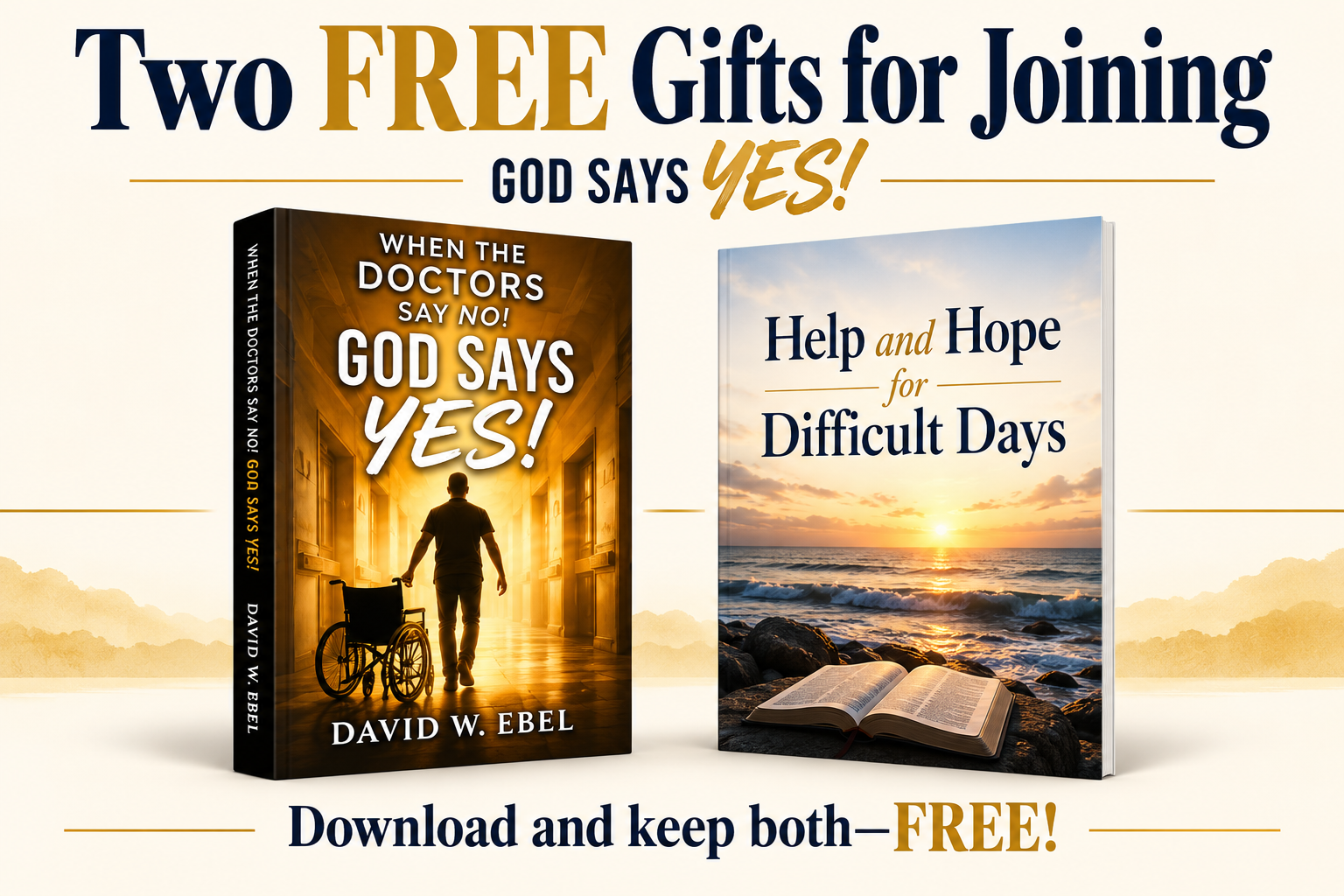
David W Ebel: All right. you sh and you need to get it on video for the places that need you but you can't get there. I I really think that'd be a valuable thing as well. So I am the I I am just in awe of what God has done. And I'm so thankful that you made time to to talk about God and how He how He worked in your life, through your life, and and how He's still going. And so someone's stuck and they're wounded, they've been betrayed or belittled, whatever's gone on. Maybe they were rotten people and now they want to be they want to have a better life. This is their moment. 'Cause it doesn't matter how you got here. It matters once you're here what you're going to do with it. And that's what we want for everybody, to give God a chance to really do what He created them for and bless their life so they can find their mission, their vision, their passion, and live the life that God and you don't have to be you don't have to fall into a building or fall through a building on an on a w with an like you did. All you need to do is just to trust God and fall into his arms. Trust him, let he's got a plan for your life. And commit to to go through your life through it. He didn't say it's going to be easy, but he promised he'd never leave you or forsake you. He'd be with you always. And he'll always give you more faith than he'll then he'll give you challenge. So you will make it if you trust him. So it's time for us to pray and get ready to close this this podcast. But when we're done, let's remember clearly that when the podcast is done, the story is just beginning. There's going to be not only what what we the what the nugget that we're talking about, but it when it goes to when we release it on the Godsays Yespodcast.com website, there will be you if you watch the vi the vi the video of it there, you can then download a seven-day devotional that will take you from where where we left off to seven days to improve your life and make it more valuable based on what we learned. in this story. So we want you to have that as a gift from us. And all you got to do to get it is just is put your first name, your and your email address on the webpage. And we'll send you even more. We'll give you my book that I wrote, which is when the doctors say no, God says yes. And we'll give you another devotional that you can use throughout the through throughout the weeks and months ahead. So let's pray and and we'll and we'll celebrate. Heavenly Father, we praise you and thank you for the privilege we have to to to live for you, to really live, not just to exist, but to go beyond what we think we can do and to do all the things you have planned for us. Lord bless what we're doing and in in making a difference in lives and bless those that are listening and hearing. Speak peace to their heart and let them know that you've got a great plan for them, and you do the what they're living through is not the end of their journey. It's actually not even the halfway in the book of their life. You've got great plans for them. And it's going to pick up where they we we we get up, where we stop saying, No, I can't or no I won't and say, God, I'll try. God, if you'll just show me how, I'll try. I'll give you a chance to prove yourself in my life. Lord, do something mighty in each of their lives and in our lives as well. Bless Jason and his ministry and help help us all, Lord. To be like him and never give up and never stop trying. Be glorified through each of our lives, including those that are watching and listening, so that they might be able to shine for you as well in Jesus' name. Amen. And there's always the challenge. You want to know God? Seek Him. You want to know Him better? Seek Jesus. Jesus said He was the way to God. And if we're gonna we want to know God, Jesus knows Him best. It's His Son. Seek after them. And God will reveal Himself and change your life forever. Thank you for watching, and we'll see you next time. God bless you.


