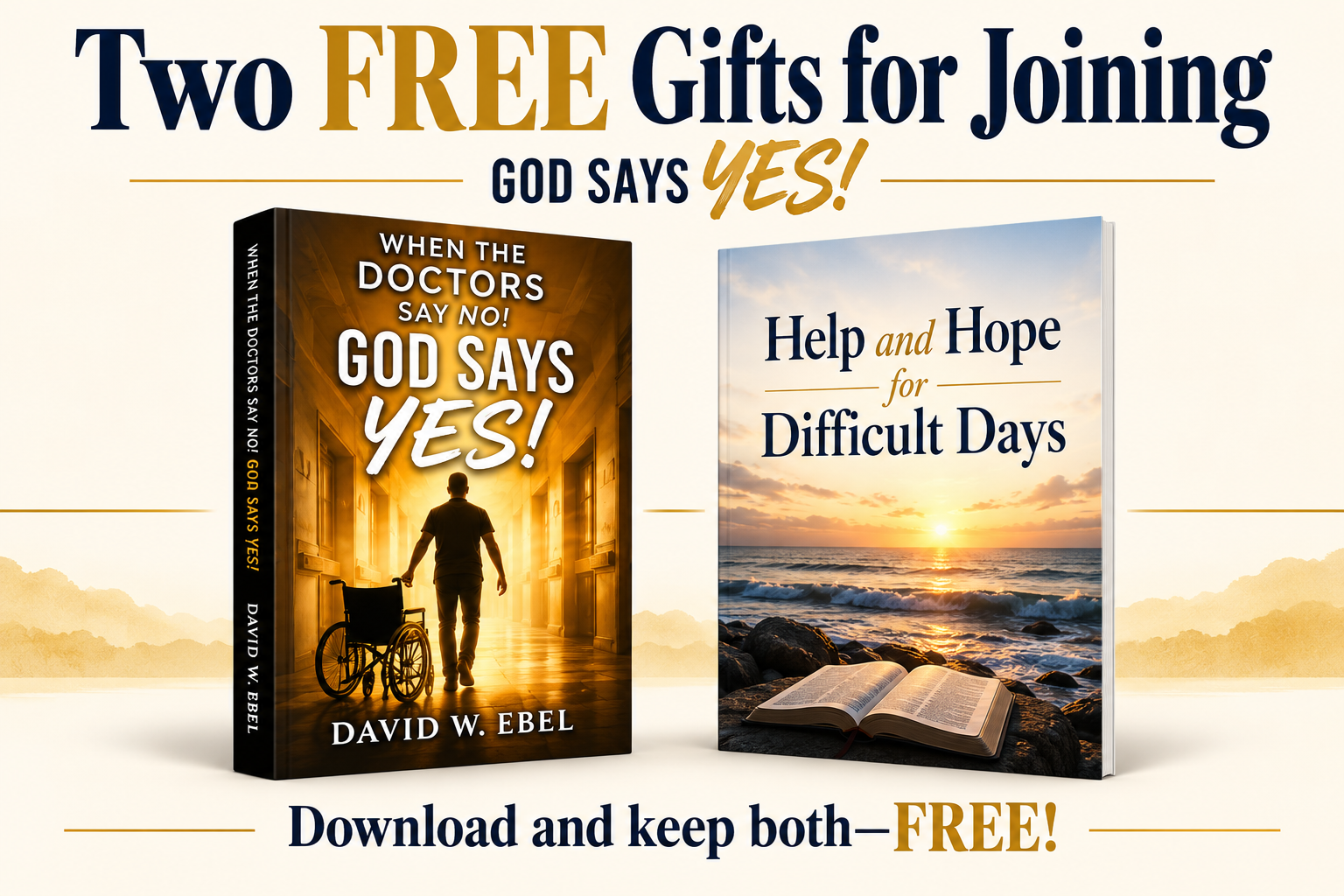
Help and Hope In The Struggle

Being there for those who need it
People often judge us by what they see on the outside, without realizing that someone may be struggling physically, emotionally, or spiritually on the inside.
Growing up as a disabled child, I did not look disabled. I did not walk with crutches or braces, but I lived with severe chronic pain. Because I wanted so badly to be accepted, I hid my pain from my peers. I did not want anyone to know I was hurting.
As a result, many kids did not understand what I was going through. Some were cruel. They made fun of me because I could not play sports or do many of the things they could do. They called me names and bullied me, never realizing how much pain I was already carrying.
Hidden Struggles Are Everywhere
Through the years, I have noticed that wherever I have gone and however I have served, there are always people who are disabled in one form or another. Their bodies may appear healthy, but they may be suffering emotionally, psychologically, spiritually, or through difficult family circumstances at home or at work. Each of these struggles can cause deep pain.
Whether the pain is physical or internal, people need to be affirmed, recognized, supported, and loved. None of us is perfect, and sometimes the greatest gift we can offer is compassion.
At the same time, if we never let people know we are struggling, they may not understand why we say no to certain things, sit on the sidelines, or avoid competing and participating like everyone else. Honesty can help others understand us more clearly and love us more wisely.
Penny’s Story
When I was pastoring, I met a woman named Penny who had been born legally blind. When she was young, she pushed herself to do things she probably should not have done, including driving for a time. She could see just well enough to pass the test, but she later admitted that she should never have been behind the wheel because it was dangerous.
By the time I got to know her, Penny could no longer drive. She walked with a blind cane and was struggling, but she would not ask for help. She would rather trip and fall than admit she needed assistance.
We befriended her and gently encouraged her to get a seeing-eye dog so she would have support she could depend on. When she finally did, a whole new world opened up to her.
During our Christmas giveaways of food and toys, instead of leaving Penny at home, we made her one of the managers over the entire distribution. She memorized everything. Even when we went to the store, she could direct the volunteers and help run the whole operation because people began to see her as capable in spite of her disability.
Penny did not realize what she was capable of until someone loved her enough to show her that she was not as limited as she believed. Today, more than 25 years later, she and her dog travel by bus or train hundreds of miles to meetings for state-level blind coalitions, where she serves as a leader.
When I first met her, she did not believe she could do anything at the church—not volunteer, answer phones, or serve in any meaningful way. She had believed the lie that her disability defined everything she could do.
Strength Beyond Limitations
Philippians 4:13 says, “I can do all things through Christ who gives me strength.” It does not say some things, or only the things other people think we can do. Regardless of our limitations, we can often do far more than others expect when we have faith, learn what we are capable of, and bravely attempt it.
Penny is now seen as a hero in the church because of all she can do. When we met her, she felt like a burden. That is tragic, because she had so much to offer.
One of Penny’s favorite promises is that Jesus will never leave us or forsake us that He will be with us always. To her, that means everything. She believes Jesus is with her day and night, wherever she goes and in everything she does. That faith is reflected in who she is: one of the sweetest, most gentle-hearted, and helpful people you could ever meet.
The Importance of Being Honest About Our Needs
In the world where you live, there are likely people who are disabled or limited in many different ways. For years, people did not think I was disabled because I did not tell them. As a result, I suffered more than I needed to. Many struggling people are not wanting pity so they say nothing.
When I gave my life to Christ at age 20, I discovered that Jesus did not have the limitations people placed on me. I gave my life wholeheartedly to Him, and He changed my life. Doctors had said I would probably not live past 20. I am 74 now. They said I would be in a wheelchair at18 yet at 74 I still get around well, walking limited amounts and a wheelchair the rest but I still do all I am called to do.
One lesson I learned along the way is this: if I do not tell people the truth about my struggles, I am living dishonestly, behind a mask. How can people help bear my burdens if I do not explain that I have them? If I do not tell others why I cannot do certain things, they may assume I do not care, that I am lazy, or that I am antisocial—none of which is true.
When Fear Becomes a Limitation
We have a friend who cannot go out in public because she is afraid of being around large groups of people. This fear is called agoraphobia. When she reaches for the doorknob, her arms and hands begin to shake, and she breaks out in a sweat.
At some point in her earlier years, she experienced trauma so painful that it created this fear. The difficult part is that a phobia is not always based on present reality, but on perception and past wounds. To the person experiencing it, the fear can feel uncontrollable.
Still, Philippians 4:13 reminds us that we can do all things through Christ who gives us strength. In many cases, with God’s help and the right support, even fears and phobias can become manageable. They may not disappear completely, but they do not have to define or control us.
We are not limited by what the world says about us. We are shaped and strengthened by what God says.
Practicing Practical Love
I encourage you to pray and ask God to show you whether there are people around you who are limited in some way—physically, emotionally, spiritually, or psychologically. We do not have to fix everything. Often, our first ministry calling is simply to accept people and love them as they are.
When people want help, we can help. But we should not be pushy. We should offer support gently and with love. If we are unsure what to do, we can still give people room to be themselves and respect them for who they are.
Jesus told us to love one another the way He loves us. That is practical love. I pray that you will practice that kind of love in every decision, every day of your life, and throughout all the days you serve.
David W Ebel

The Higher the Pedestal the Harder the Fall


 YouTube


