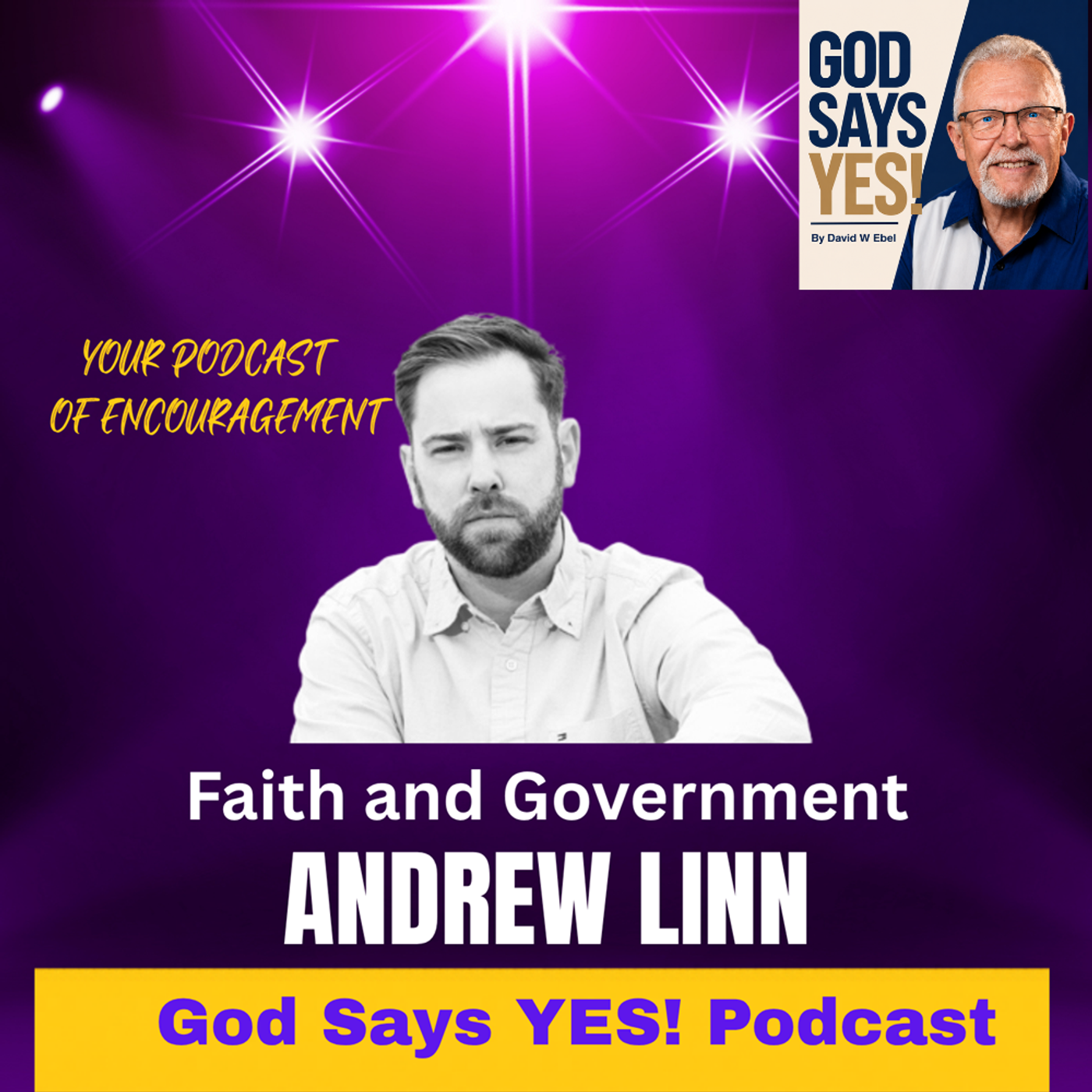
God Says Yes 4th of July Special Andrew Linn


 YouTube
 Andrew talks about his faith and his documentary that tells what the phrase "separation of church and state" really means and why our founding fathers felt it was important.
David W Ebel: Hello, my name is Bill Costello. I am co-producer of God Says Yes along with David Ebel. About a week and a half ago, David interviewed a gentleman that has directed and produced a documentary called Church and State, Roger Williams, and the founding of Freedom of Religion. I am an Air Force veteran and David is a retired Marine Corps chaplain. So we were very interested in what this gentleman had to say to us. And we're eager to watch his film and to have you watch it as well. While I was editing the podcast, it occurred to us that this episode should be finished quickly and released on the nation's two hundred and fiftieth birthday, which of course is today. David suggested that I should record the intro explaining this special Saturday release. That's why you're seeing me here today and not David. Anyway, so without further ado, here is our special fourth of July edition of God Says Yes. We truly hope that you will enjoy it. Welcome to the God Says Yes podcast. You are welcome. Welcome to another episode of God Says Yes. My name is David Ebel, and I am your host. After fifty plus years of ministry all over the world, â this chapter of my life, â we we are meeting people electronically. And â our goal is to to find people who've been struggling. What no matter how you struggle to get where you are, this is where you are today. Whether you've been wounded, betrayed, cheated, â church hurt and if you've been hurt at church, I I'm sorry on behalf of the rest of the the body of Christ, we we apologize. â but some what the emergency room of the body of Christ is is the church. And sometimes people when they go in the emergency room are kicking and screaming, they're not having a good time. And when people come to church without knowing what it's all about, many times they act out because they're uncomfortable. And unfortunately s we sometimes we're the ones it splashes off on. But God heals us And changes them and we can move on. We just have to remember that the person who acted out isn't God. He's just a some a struggler. God Himself is perfect. He created you to love from the inside out. We don't have to look like the same person on the outside, but from the inside he created us to love, to be forgiven, to be healed, to be blessed, to be directed, to give and hope. And that's why we're here. We want it we want you to find some hope, to get past the wounds and to and to let God do something wonderful in your life. So we're grateful that you're here. And â I have with me my my br my brother and friend Andrew Lynn. And Andrew, well welcome. We're glad you're here. â thank you, David, for having me. I really appreciate it. Well, and Andrew, tell us a little bit about yourself so we know who you are. Yeah, absolutely. So yeah, â my name's Andrew Lynn. I'm a documentary filmmaker. â my latest film is Church and State, Roger Williams and the Founding of Freedom of Religion. I was raised â My father was Jewish, my mother Episcopalian. â so I grew up kind of in a secular household. We didn't go to I went to church a few times and never went to synagogue, but we celebrated both holidays, so I got the best of both worlds. I celebrated Christmas and Hanukkah, Easter and Passover. â and then as a young adult around twenty-three, twenty-four, â my my father died when I was thirteen and at that time my mom was, you know, preaching to me Jesus all the time, Jesus, Jesus, Jesus. So â you know, I was intrigued. You know, she kind of badgered me. â and my brother at that time, â a little before that had had a conversion, â where I saw the fruit in his life. So my mother was preaching to me and my brother was showing the evidence of what Christ can do in people's lives. So â he got married, you know, had kids, did a complete one eighty from the way he was before that. So I saw these things that I started to read the book of Matthew, and â I realized, you know, if Jesus had done all these good things and said all these good things, you know, as as a half Jewish person, I always believed there was a God. I believed in one God. I didn't know who he was. But if he did all this, said all this, and he also said, you know, I'm the only way to heaven. I'm the Son of God, â you can't I felt you can't take only the good stuff he did and separate it from everything else he said. So I s you know, got on my knees that night and I said, Lord, â God, I believe that Jesus Christ is your son and I accepted him as my savior at that point. â and I and something I should mention is before that when I would pray to the God I didn't know, but that I you know had some idea that there was one God, I'd say God when I prayed. You know, my my prayers would rarely if ever got answered. But once I started praying in Jesus' name is when my prayers started getting answered regularly and â miraculously. At that at that time I had just started a company That I have Yes. â I I have a question before we go any further. Sure. â you you you gave me you you amazed me with how much more you gave me than I expected. Which is not bad. I'm not complaining. It's just this is casual. We're we're we're here for for the for the the enjoyment. But â who were you before Jesus a a little bit? And then I'll ask the next question will be when you met Jesus, what did he do for you? Yeah, sure. Not about your brother, but about you. So let's start with who who were you before Jesus? Yeah, so before Jesus, I was a typical average worldly guy, you know, I was doing drugs, alcohol, you know, â my God was my sinful desires, basically, you know, my flesh. So after getting saved, you know, I did a one eighty, I I don't I stopped drinking, I stopped smoking, â you know, and I lost friends because of my faith. â you know, because he calls us out of the world. And â importantly, â just quickly I'll say that when I did get saved, I kept my faith private because I wasn't going to church initially. But once I started going to a church where I was discipled, my pastor told me, you know, you can't keep your faith private. You have to, you know, be public with your faith. And so I did that as he told me, and then â as I did that, you know, lost some friends but gained much better ones, you know, Christian friends who you know. Yeah, with love the love of Christ, which I'd never experienced before from you know, friends. It's profound, isn't it? Yes, yes. Much better. I understand. When I when I gave my life to Christ, I lost ninety nine point seven percent of my friends in one day. Right. Yep. â and as soon as they found out I was a believer, a man, they cut me off faster than a razor blade. Yep. And and that but the the new friends I made in church, you know in you know, in in three months I had more friends than I'd ever had in my life. Right. Yep. And they're still my friends. Mm hmm. That's that's fifty some years later. So â you know, I get it. But now you y you began earlier telling us â about all the things you've done. But okay, God has met you, you've met with him, you've changed. Now how is that now now with that the passion to serve him gives you make makes you to do what? yeah. â well, so I became â documentary filmmaker soon a few years after being saved. Yeah, I was discipled and you know, I was still a babe in Christ and as I grew in Christ, â you know, he led me to start making documentaries. I went to film school before I was a Christian and I had made a short doc a short documentary that â ended up being good. I was surprised to my surprise. â so before then I had a even though I didn't know Christ, I knew that was kind of the way I was being led, like it was the path of least resistance. â so â when I became a Christian, â I started this company doing videography and editing. and, you know, over the years I'd wanted to make documentaries, but I was like, â you know, â who do I think I am kind of thing and then God kinda laid it on my heart to do it and â has blessed it and there's been much success with it. That's amazing. As a as a result of that, now you you've done another vi â documentary, and now this new one that you've you've done, â we're we're gonna take these a little bit out of order today because I it's all kind of blended together. I can see that now. â the the newest documentary, it's called Church and State. I can see I can see that right next to you. â you wanna tell us why why God called you to that? Yeah, so â it's about Roger Williams. He's a unsung hero of the Amer â founding of America. and I like making films about unsung heroes like Fearless Freddie on the other side of me. â he he was a World War II submariner not well known. â well Roger Williams is where freedom of religion comes from. And he is the founder of Rhode Island. â he immigrated here from England as and was a Puritan with he came along with the other Puritans. â he settled in the Massachusetts Bay colony. â the Massachusetts Bay Colony, a lot of people don't know this was a theocracy. It was a religious state. â they controlled pretty much every aspect of your life. If you lived there, you couldn't have long hair, for example. â you could be banished for being too proud. â you had to go to church on Sunday. And Roger Williams saw this, and he he as a Puritan and theologian said, Well, you know, we can't force people to do things â against their will. â that just makes hypocrites and at the edge of his sword â people can say and do whatever to survive, you know, there that doesn't mean they have a converted heart. â so he went on to establish, as far as we know, the first colony in world history or the first government in world history to have freedom of religion in its charter. And this is a hundred and you know twenty or thirty years prior to the Constitution. So â yeah, so I wanted to â make this documentary to â tell his story and clarify the meaning of the separation of church and state, which has become a confused â topic in this day and age. Well that that's that's amazing. I'd never I I had never heard any of that before today. But now I want to see the video now. Well good you've wet my appetite. So I'm sure others it's gonna it's gonna cause them to be more than curious. Because, you know, faith is is great when you have it in you. But when you open up the Bible, Jesus says that it's only faith it's only belief in f in life when you share it. It's it when you it stagnates. It's like a river when you block it off. You the waters looks beautiful until it sits a while and then it starts turning into into a a a a a scum. And but when you when you let it be free flowing it's always fresh and beautiful. And that's how it is with our faith. The more we share it, the more purely we share it. â the more beautifully others can receive it. And in the culture we live in right now, where â it's skepticize everything, doubt everything you can, for for the most part, what's in it for me, â it is it's imperative that we live what we believe before we speak what we believe. We need to earn the right to be heard. And it's it's not that we've done anything wrong, but our culture has changed. And so in that changing culture, it becomes more imperative that we be the real deal. Right. And as a result, we t we share with that real deal in innocence in our heart so that people can see God in us and not have it be polluted by anything else. â I'm I imagine a good picture would be d word picture of it real quickly is I remember when my kids were little playing in the pool in grandpa's backyard, my older j â child was Probably five and the young one the daughter was a four. And they were like inseparable. They looked like twins. And they were in the backyard playing with with it with the the pool and the garden hose. And older brother held it over his head and got himself really wet. And little and little sister was just as jealous as she could be. She says, My turn, my turn, my turn. And he went, No, it's f that's for big kids. My turn. So he gave it to her and he crimped the hose. She looked at it and shook it, nothing came out. And she just couldn't get it. And then he let go and it went gaboosh and she felt like she was drowning. You know, the blessings of God are like that hose. They can come purely through us when it's not pinched or restricted. You can have all the power of the water is, but when you pinch that hose, the water's going nowhere. When you have all the beauty of that God has, but we inhender it with attitude or other things, we s we're we're we're restricting the blessings of God. to get to the person who needs to hear it. So being tr doing what you're doing with the the vit the videos, the doing it â doing it by telling the truth in love, and doing it when you're when you're talking to people, you are an example of God's love in action. And I think that's amazing. â well thank you. It's quite a compliment, I don't know. Well I appreciate Compliments are real when if if you're j if they're genuine you should say them. in our culture i it makes people awkward when they get complimented because they're not used to it anymore. They're used to being kizz snide comments and put downs. But it doesn't mean we should we who believe should should stop being kind to each other and encouraging each other. So you d you deserve that and I'm and you so enjoy it. Soak up. Because there may it may be a little while before you hear another one, but that still doesn't mean the first one wasn't genuine. Well thank you. No, I really appreciate it. Thank you. Yeah, well â I appreciate what you're doing and the fact that you have the the courage to tell a story that that hasn't been told. That you you're highlighting something that we need to know as Americans. Yeah, absolutely. And as we approach the two hundred and fiftieth anniversary, and that's something I'll mention, is that I, you know, wait you know, I wait on the Lord before I do these things. I don't want to get ahead of the Lord and do something, you know, not in his bullet. And I had had this idea about it. For about seven years and then God kind of pushed me to do it last year. And I didn't I I wasn't even I didn't even think about the two hundred and fiftieth anniversary coming up. â so â it's â I I completed it in October twenty-five, but you know, just in time for the two hundred and fiftieth anniversary. And you know, I think our country's under attack, the our identity is under attack, and I found that â the church and state argument is framed as freedom from religion and really it's mainly just freedom from Christianity. It's really just â hey, get Christianity out here. Islam's welcome, everything else is welcome, you know, witchcraft or you know, paganism, we don't mind that. But your Christianity, keep to yourself. You know, keep it out of the public square. And that's not what the founders intended at all. â if you know, we were to it's to allow your gods into the public square. Let's let's debate, let's have a conversation. That's where real tolerance is. â you know, it's not â banning you know, speech and religion. That's anti American. So no and and and the confrontational â violence that that is that has never been the American right way to to we debate, not you know, press down and beat up. Right. And yeah, and that's that's the main thing that's somehow in our culture we have gotten the idea that if we disagree we that we have reason for a fight. Right. We we built our country on differences and and understanding them. In coexisting. I don't have to agree with you. I just have to respect you. Right. And â yeah, so I think what you're doing right now is is im very important to our country. Amen. I I think so too. I think it's very relevant for today. â I would cons I I like to say that Roger Williams was kind of the Charlie Kirk of his day, because he was banished. Fortunately, he had a different fate than Charlie Kirk. He he did they wanted him to die in an English prison, the authorities of the Massachusetts Bay Colony. But he escaped, he founded Providence, he called it Providence because God providentially brought him safely to this land. â he bought the the land from the Narragansett Bay Indians. and and then he was tested, this freedom of religion thing. He was tested pretty quickly because because of freedom of religion, Rhode Island drew in all the people nobody liked, because they were getting banished from everywhere. So a lot of Baptists settled there, â Quakers settled there, and Roger didn't like Quakers. So he was put to the test pretty quickly. And so what he would do is he would row for four hours in a canoe and go debate Quakers in his own colony. He never banished them, he never persecuted them. He simply debated them and try to convince them, you know, of the truth or, you know, I'm not saying his version of Yes. I yeah, correct. So he would try to convince them of his position rather than, you know, destroy them or punish them for thinking differently. He was w he was wise beyond his years. Absolutely. One one of the things that I I really make sure that â our podcast does is we don't talk about the labels on the buildings, we don't talk about the the extraneous things, we talk about the foundation things, who Jesus is, what he did for us when he died and rose again, how he took it the he used they used God used his blood to wash away our sins. So when God sees us, he doesn't see our failures. Because of Jesus and the blood that was shed, he sees a forgiven person who's who's been bought into the kingdom of God by that blood and now is is is righteous in Christ, who can live with God and and as long as he keeps his faith, he gets you know, he'll go to heaven. And and and so he lives g better here, and then he gets a new body in heaven that lives better than he could ever dream. Amen. And but it's all important. â that each of those steps is there. And I I I liked I like the fact that you're telling this story â f to everybody, every faith, anybody. Because, you know, God loves everybody. Jesus died for everybody who will let him. The only reasons why some people don't get forgiven is because they refuse him. That's why missionaries go all all around the world so everyone will hear. So no one will will can say, Well I never was told. It's our job as believers to get out there and tell so that everyone has the opportunity to love him. Amen. Well, I I'm I've been grateful for this. This is a we've covered a lot of ground in a quick time. I'm really â I'm really grateful for you coming on and and talking to us. Tell us a little bit more about the the the the the the new documentary. You have a few moments. Yeah, absolutely. So again, yeah, it's about Roger Williams. â as I mentioned, he's the founder of Rhode Island. This is the first charter or constitution you could call it in world history to have freedom of religion. and it goes into a little bit of the history that, you know, some some of it's commonplace that people know about the pilgrims coming here because of religious persecution, but it talks about how in England, â something that was funny â was that â this religious persecution you'd have a Catholic king or queen and they would persecute Protestants and then you'd get â Protestant king or queen and they would persecute â you know Catholics â and vice versa. So it was the Seesaw effect. So it was going back and forth â and it was kind of ludicrous. And that's kind of what Roger Williams was saying is, you know, i this is absurd. You know, these pilgrims came here and they established their own form of religious uniformity and religious persecution. â they had just escaped it themselves. And he thought to himself, well, that that doesn't make much sense. And and you know, for me personally as Christians, â you know, we're not too w we're not a theocracy. We live in a spiritual kingdom, â yes, but the theocracy won't come till Christ returns. And in the meantime, we can't be, you know, forcing people by the sword to convert to Christianity. That's you know, antithetical to Christianity, and I believe that's what Roger Williams understood. So, yeah, the film â interviewed four people for the film, four â two authors, â actually three authors and a pastor. and â one of the authors is a New York Times bestseller. â he wrote the preeminent book on Roger Williams called Roger Williams and the Creation of the American Soul. â the other gentleman I interviewed, â he's president emeritus at Mercy University. He wrote the book â Separating Church and State, Roger Williams and Religious Liberty. â and then Bill Federer, I don't know if you're familiar with him, but he's more popul Yeah. I interviewed him for the film. He's kind of viral on the internet. He's a incredible public speaker and you know, always he talks about he's a historian, talks about the Christian â foundation of our nation. â and then the pastor is just â very well read, very articulate guy who kinda, you know, brings this all together as well. So I'm look I'm looking to find a way to invite him on this podcast too. So Bill Federer. Yeah. â okay. Yeah, it was it was a miracle â that â I got I got him to be in the film. I emailed him you know, directly â from his website â on a Thursday and I interviewed him that Sunday. He was â in Virg yeah, yeah, he was in Virginia Beach, which is like four or five hours from me. â and he said, â where are you based? I told him, he said, Well I'm gonna be here this weekend, if you can make it, you know, come by and and he did and it was It was amazing. I had like twenty six or so questions ready for him. I think I only asked three or four because he can just go and go and he covers a lot of ground and it was it was great anyway. So well I this is wonderful. And â what has this done to your faith? well, so at times it it really challenged my faith. Because sometimes, you know, when you do something like this, like that was very encouraging that he, you know, was immediately willing and I was immediately able to get a hold of them and interview But then, you know, you go through you peaks and valleys, right? That was a peak and then I had a valley where I'm like, is this really God's will? What am I doing? You know, when things don't go right and you you get confused and you get worried and you're just like, â so it it's definitely increased and strengthened my faith, but there was you know, it's an exercise, right? You you work out, you y you get sore, â But the fruits at the end, right? The you know, so Absolutely. So yeah, that's kinda what's been going on. Faith is faith is like a muscle. Yeah. The more it's gonna hurt hurt a little bit when you start using it, but the more you use it, the stronger you get. And the more and the more you trust in faith and and apply it, then d greater doors open because God can trust you with them. Amen. And this is a is a is a proof of that â lived out that â Believers don't have we have this t story told to us that come and meet Jesus and your life is going to be great. Right. And that that's good for the first thirty seconds. Yes. But but after the forgiveness, which is great in the free, comes the ch the commitment to love him and serve him, which costs the rest of your life. Right. And that's not a bad thing. It just it's just a it we have to get rid of all the stuff that ruined us. one inch at a time by giving it to God and letting him cleanse us from it. And then he fills it with things that are much better than what we give up. You know, our bitterness becomes healing and hope and forgiveness for others and strength. So you know each of the the trade offs we give up something that we're really not enjoying anyhow. And we get something that's phenomenal and amazing in replacement for it. So you're you know we're doing this the your struggles are part of the growth. Amen. Yeah. And â I agree a hundred percent. And, you know, he paid it all, you know, so of course you know, what does it cost us to, you know, be a living sacrifice, as Paul said. You know, I mean he he did it all and you know, we just have to deny ourselves and follow him, which is hard. And you can't do it without the Spirit of God. You can only do it with the Holy Spirit. â and yet even the worst times as a Christian are better than the best times as a unsaved person, because you know, all that the life you live unsaved where it seems worry free and carefree and you're living the way you want and all this, you know, it has a cost. You know, you're just putting stuff on credit, basically, your life. â and I feel like as a Christian, you know, as it says he he disciplines though those he loves. â we kind of pay for our sins in some degree here. â like you said, he's pruning us. He's â you know, trying us by fire our faith. And â so we don't you know, we come form to the image of Christ and you know, â and as we get closer to our end and to seeing Jesus, you know, we're more prepared. â and â so yeah it's it's worth it absolutely. And â but yeah there are challenging times, you know. â yeah, like you said, it's it I've heard that saying that expression, I'm sure you've heard it too. It's not a cruise ship we're on a battleship, right? So Yeah. Yeah. Now one one of the things that when you were talking about it, when when we give our hearts to Jesus and he forgives our sins They're gone. It's over. We're now but we still have the the residue. You if you s if you someone spl you're what standing next to a street and s a car goes by and splashes you with the mud, you're still you. Right. But you you st you still gotta get all that yuck off of you. Spiritually, when you give your heart to Jesus, you still have the bad behaviors, the things that aren't right, the doubts, the fears, the worries, whatever. And that's what God develops. He changes you one inch at a time. Till you're like him from the inside out. And that's why he made us that way from we were born with the with the faith in us. We just have to f we have to figure out what it is and how to use it. But the God builds us that way so that there will be a day when we can choose him and live for him. He's not willing that anybody should perish. it's not his plan. I have people say, Well, he sent someone to help. No, he didn't send anybody other than the devil and his angels. We if the only way we go is because we say no I will not do you know, if I if I give you a map to Texas and you say no I'm going I'm gonna go north only, it's not it's not the map's fault that you end up in in Saskatchewan. Right. It's it's it's it's your your personal stubborn will. Right. So when God is the map, he says, you know, I am the way, when we follow his way, we're going to end up where God planned for us. And the life will be so much better along the way. And that's exciting news for everyone who's viewing, that it's not just what we were, it's once we're forgiven, what we can become. And that's why I asked you that question before, is because I wanted to know what you what what what you became from that forgiveness, and you shared it with us. And I think that's imperative that people know that when you give your heart to Jesus, that's the beginning of the greatest journey you could ever have. And struggles are there, but he gives us strength and courage to go through the struggles. We're not we're not alone in them. We're not abandoned in them. He you know, he never never leaves us or for for sixes. He's always there. So I am excited that you made time to be on on the podcast with us. And â you want to tell us the name of the the what how how we can look at your website? Yeah, it's church and state doc dot com. That's church and state D O C short for documentary dot com. And â you can watch it for free there. It's on YouTube. There's several different platforms it's on. You can watch it. And if you want to watch it ad-free, â you can watch it for five dollars on Vimeo.com. So yeah. Okay, that's that's amazing. Is if someone wanted to to then record it and then share it at their church, is there a way to do that? â well, you couldn't record it, but yeah, if you you if you go to Vimeo, â you can pay for it and have it. you know, for ten dollars you can own it and then, you know, watch it ad free in front of the church. Okay. That's so that's the for ten bucks, that's nothing. Yeah, I I think so. And I've even considered like going to churches and presenting it. â we did have a premiere for the film when it came out in October. â and I was thinking of that doing that. But because it is valuable for the church, â for homeschool families, for â just anybody interested in this topic and in history and want to learn and have clarity about these things because there's a lot of information that I learned while making it that a lot of people don't know. Like a lot of people don't know that the colonies were religious states. They you know, before the Constitution they each had their own â religion married to the state. So Anglican Virginia, Catholic Maryland and so forth. â so, you know, there's a the freedom of religion was based on things that today we don't understand quite as well because we have freedom of religion very clearly in our present day. And we can become something of a secular society, but it what the reasons we think of freedom of religion today are different than what the founding fathers thought of back then. Yes. Yeah. Well, this has been amazing, and I'm grateful for your time. And â we're going to I think we're going to get ready to pray and and close our our time together. And then a after we pray, I'll I'll have a challenge for everybody, and then â we we will look forward to to everyone getting involved in this. My my my desire is that you who believe would share this information with your churches, with your homeschool groups, wherever you can, so that so that this story gets told, especially this year, for the twenty you know, for the this anniversary, we need the world to know that faith was part of the founding and that faith is still part of the of the existing. And that we we don't stop other people from believing, but we don't di we don't need to surgically remove anybody's faith from it as long as it doesn't destroy others. And â so w I wanna I'm gonna encourage you. I know I'm gonna do it, and I'm going to â arrange what to â for my pastor to view it and then encourage him to show it at our church. â I can't t you can't tell people what to do if you know if you don't show them and help them understand. So I'll present it to my pastor and if if if and when he says he will agree, which I w I'm confident he will, â then it it'll become a special event. We'll make a big deal out of it and make it a special event and invite the entire area around us to come and to view it with us, because it's too important to not tell that story. So I encourage you to take this as a personal ministry extension, an opportunity to build our foundation faith. in in in greater ways. So â with that being said, let's pray. Heavenly Father, I'm grateful for this honor we've had, the privilege to share about this founding piece of our faith. I'm grateful that our our brother is it can can tell us with with genuineness of his faith life change and what God has done with it, what you've done in him, how as a result You you you worked in his life and i even when he didn't know it when he got his film â training. You knew you knew be when he was born what he would need to do the videos and the documentaries later in life. So Lord, we're grateful that you you had your hand on his life his whole life. We're grateful even more that he b that you became real to him and he accepted you and and gave his life to you, and then he became a servant, a tool. you could use t to sh to share the good news of your love in all kinds of ways. We ask you bless everything he does and make a difference in his life. We ask that you give him divine opportunities so that this video this documentary, I keep saying the wrong word, the documentary is seen in as many venues as possible. Lord bless him in his home, in his finances and all that he does, and make a difference in his life for your kingdom in Jesus' name. Amen. Amen. And now for the challenge. Seek after God, he will be found. Wanna know him better? Jesus said he was the way. Look that way. Ask Jesus to reveal him to you through his Holy Spirit, and he will be glad to do that and make himself real to you in ways you never dreamed. And we are honored and privileged to have had a chance to encourage you in this special endeavor. This has been the God Says Yes podcast with David Ebel. To connect with David, email him at GodsaysYespodcast at gmail.com. You can get his latest book, When the Doctors Say No, God Says Yes, at Amazon.com.


