
Jessica Morris
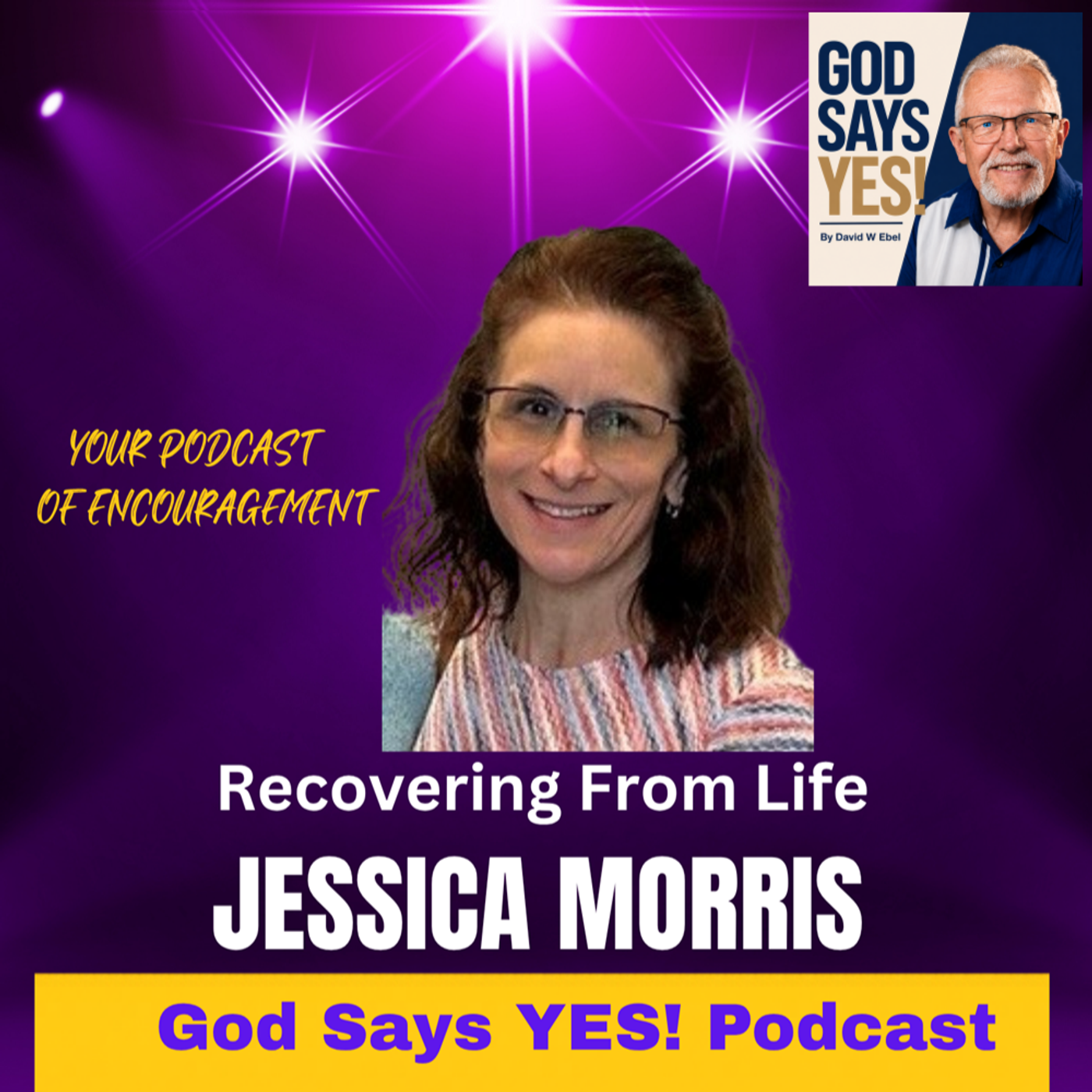


 YouTube
 The podcast episode explores the themes of God's unconditional love and the journey of recovery and transformation. It delves into the purpose of God's love, Jessica's personal journey, and the process of recovery and transformation. The conversation delves into the themes of surrender, faith, and transformation, as well as the transformative power of forgiveness. It explores the journey of surrendering to God's plan, redefining hope, and the concept of forgiveness as a catalyst for personal growth and healing.
Takeaways
- God's unconditional love
- Recovery and transformation Surrender and faith in God's plan
- The transformative power of forgiveness
Chapters
- 00:00 The Purpose of God's Love
- 22:20 Recovery and Transformation
- 30:52 A Vision of Fear and Surrender
- 38:02 The Concept of Forgiveness
- 47:18 The Journey of Surrender and Transformation
- 56:03 Redefining Hope and Faith
David W Ebel: you Welcome to the God Says Yes podcast. You are welcome here. Welcome to another episode of God Says Yes. My name is David Ebel. I'm your host. After 50 plus years of ministry, my heart has never changed in the fact that I believe that God created us to love. He created us in His image from the inside out. And He's always loved us. He will always love us. And there's not a thing we can do to lose that love or to abuse that love. We can't run from that love. That love is created. We're called with it. And in the puzzle of our lives, He is the only puzzle piece that fits the God-shaped whole of our heart. And so that's why we're here. We're here to encourage those that are struggling. We're here for you who have maybe been betrayed, belittled, insulted, not paid what you were deserved, somehow promised one thing and been given something else, let down, all those things that make us want to pull back. And without realizing it, sometimes we blame God for people. And church hurt is a real one of those things. People go to church and because the church was designed by God to be the emergency room of the kingdom where the broken come to be healed, sometimes those that aren't ready to be healed end up hurting others. And that's a shame and it shouldn't happen, but on behalf of those who were trying to do it right, you know, I apologize even now that no one should have done that to you. But Jesus didn't change. God didn't change. He created your love and His love is the same. And He'd love to draw you close to Him. You can dump all the people that get in the way. Just put them on a hook someplace and say, I'm not dealing with you. open that, drop that wall and open yourself up to the love of God. Does it matter what your church building says or doesn't say? Does it matter what you've been told? Well, I've always been a this or that. This is about the reason for that. And that is Jesus died on the cross and rose again. shed his blood so we could be forgiven for our sins and healed from our past and re-inspired, rebuilt to live a life that's worth living and given joy. Even in struggle, we get joy. And that's what I want for you. So I'm grateful you're here. I welcome you and I'm glad you made time for us today. I have with me my friend Jessica Morris. Jessica is a neat lady. She's been through a lot and she's come out the other side with a joy that bubbles forth. Her ministry life is helping people who are struggling. So she fits our model perfectly because that's who we are and what we do. And I'm grateful that she made time to be with us today. Jessica, welcome. Thank you, David. It's wonderful to be with you today. And would you tell us a little bit about yourself so we become friends instead of just viewers? Sure, sure thing. â I am, I just turned 56, so I am, â you know, a child of the 70s and 80s, which was a really fun time â for the most part. I am currently working as a spiritual director and an author. A couple years ago, My husband said to me, he gave me the greatest gift of my life. said, quit your job and see if you can make it with this writing thing. And I'll give you till I want to retire â and see how it works. So I have another year to go before he retires. And, I do have a couple of books out, which is wonderful. It's a really hard business to get into. â but I'm very much loving my life right now doing that. and I have no kids. I do have a cat that is persnickety and thinks that she knows everything and she probably knows a lot more than we do but â I am an aunt, a little sister. â I'm a woman in recovery. There's a lot to say. I mean, I could go on and on, but I think I'll stop it there. OK, that's great. I've been in recovery since 73. I get it. you know, there's two views of recovery. There's the, know, I got sober. And then there's the I got sober because God is my spiritual director. And as a result of that, I don't have to just get sober. can start a new life. Absolutely. And that's the one I hope for everybody that somehow they'll get past just being, I'm in recovery â as their job description and into I'm in recovery, therefore, and discover the rest of their life. That's my dream. So Jessica, tell us your story. I think people would love to hear who you were, who you is, and who you think you're going to become. Yeah. Well, here we go. I am the youngest of four children. I grew up in, I was born in 1970, so I grew up pre-cell phones, pre-computers, know, play outside, all that kind of stuff. You know, come home when the street lights go on, turn on, that sort of thing. My dad was a minister in the Methodist Church. My mother was a school teacher and the perfect minister's wife. â They both are children of alcoholics. Both my grandfathers were alcoholics and my father. was also a pretty violent alcoholic himself. He â was also a lot of fun. And we lived in a very small town and â working class kind of people and my father partied with them. So he was the minister who drank and smoked with the guys at the fire hall and they loved him. And so, you my mom, having grown up in an alcoholic home was really good at the codependent part of things. And so we learned at an early age that things that happen in the home are not spoken of outside of the home. â My dad's job depended on it, as a matter of fact. And so, you know, you learned how to keep secrets at a very young age. â I do not remember the age I was at, but I was young. I remember where we were in the house when my father told me that I was a mistake. And that didn't just come from my father, who was probably drunk at the time. I mean, that doesn't excuse it, but that's my belief about that. â It doesn't excuse it, it explains it to me as a grown woman, I understand it. â But what I heard was not just my father telling me that I was a mistake, but because he was also my minister. I heard God saying that I was a mistake. And I went to my mother almost immediately. I was really tight with my mom. You know, she took me everywhere with her because I was the youngest â in our family. And so when my brothers and sisters went off to school, I can remember sitting and watching Mr. Rogers with her, you know, and we would go to all their school plays and all that kind of stuff until I was in school. And so I thought, well, my mom will tell me the truth because I thought that couldn't possibly be the truth, right? I can't possibly be a mistake. And so I went to my mother and I asked her if I said what he what he said and I asked her if that was true and she said well he should not have told you that. And I was old enough to know that that meant he was right. And at least that's what they thought. Now, what I did for the remainder of my childhood and most of my young adult life was try to prove that I was not a mistake. Yes. And tried to not let anybody else ever know that my father told me that because if other people knew I was a mistake, then they would make fun of me and you know, all that stuff. So it was, it was brutally painful. Yes. To live that way. My father was abusive physically. He was verbally abusive. â I honestly have told people, and I mean this with every ounce of my being, I would have much rather my father hit me than the things he said to me because the bruises are gone and the things that he said lived in my head for many years. â And that's a really hard way to go through life. In hindsight, I see the beauty in what God does with the horrible things because my eldest sister, who is six years older than I am, she was the first born, I think she just decided when I showed up that I was hers and she was gonna parent me and she did. And to this day, she has no children. when I got my master's degree, the her master's degree. know, she just, she took care of me. She helped me escape. like, as soon as she got her driver's license, she threw me in the car and off we went. And I mean, I was all of her friends. I was their little sister because she took me everywhere with her. And to this day, I look back on that and I just thank God that that he gave me I feel like he gave me her I mean I know not everything revolves around me but I just feel like and maybe he gave me to her too maybe she needed me as much you know and she's still she's my best friend â we have our own little language just wonderful and you know and so I those are the kinds of things that in my life and I'll probably go back and forth like this a lot because in my life you know it was a horror way to grow up and it was also really wonderful in those places where I see God was â taking care of me through people, through circumstances that happened and so while I couldn't see it at the time You know what you said about recovery is true that recovery get took the blinders off for me You know because all I could see when I got into recovery that I was a I was a victim I was a victim and I was put upon and the whole world hated me and nobody could understand me and I just wanted to die and I was never gonna get what I wanted I mean it was just that ongoing horrible loop of victimhood that I lived in and after you know the people in recovery kind of smacked that out of me. I needed to be smacked around a little bit, â figuratively about that. â You know, I started a gratitude list and it changed the way I looked at everything. And to this day, 26 plus years later, I still exchange a gratitude list with two other people in recovery every day. And I teach it to all the women that I mentor â because it truly does change the way that I look at look at my life today. â So, so what happened? â You know, I started my addiction started very young, as much as I hated my father's addiction. â I went right there. I'm a recovering food addict and food is my first real memory of life. I can remember sneaking food out of the refrigerator before I remember anything else. I can remember climbing up on a counter, like having to put a chair over to the counter so I could climb up on it to get brown sugar out of the cabinet and just eat it with a spoon because I needed that fix. â Alcohol came in pretty soon after that, but I also was able to keep a lid on that for the most part until I went to college. There were a couple instances when I was in high school where I ended up â passing out, blacking out, and getting caught. And when I got caught by my mother, â she basically threw down the gauntlet and she said, no more sports or anything if you continue doing this and I loved playing sports. I played sports all the while I was growing up and it was early enough in my addiction that I was able to control it to a certain extent and so it wasn't until I went to college that alcohol really took over. â Alcohol, drugs, boys, you know, I mean I didn't care about anything anymore other than trying to land a husband, you know, who would take care of me and rescue me. you That did not happen. Flash forward, that did not happen. â You know, it's kind of hard, know, when I look back on those times and I see pictures of myself, my weight during those times went drastically up and drastically down. â You know, I was all over the map as far as my weight. I was usually pretty fit when I was playing my sport. I played field hockey up through college, but the off season, I'd get really big again and that, you I mean it just went back and forth till the point where I could no longer control it and by and anybody who's a food addict will understand this You know, there was a long period of time in my life where if I needed to lose 15 pounds I could lose 15 pounds. No problem And then what would happen is I'd be able to lose 10 pounds, but I wouldn't be able to get the next five off You know, and then what would happen is I'd now have to lose 50 pounds and I could only lose 40. You know it was always like that. It was just this constant seesaw. And towards the end, would say the last four years or so before I found recovery, I couldn't even lose a pound to save my life. I mean, it was just brutally painful. I was near 300 pounds and I'm 5'4". So this is not an attractive thing to see. â I had a million health problems and I was 29 years old. mean, just not healthy living. I was seeing a counselor and I had actually, let me back up a little bit, â probably about a year before I got into recovery, my eldest sister who I talked about â called me out. And she said to me, because I was a horrible drunk, and â she called me out one morning after one of those horrible drunk nights. And she said, I'm not going to watch you do to your life what our father did to our family. And she turned around and left my apartment. And it was horrifying to me in a million ways, because like I said, she was my best friend, she was my parent, she was my everything. And I was really, really angry at her. How dare she put me in the same category as our father. So I spent the next year or so proving to her that I wasn't an alcoholic. And that's when my food behavior got completely out of control. So I was like, just transferred. I was like, okay, well, I mean, and I didn't do any of this consciously. This was just what I did. And so I was addictive. addictive people can trade addictions without even thinking about it. It's just it's that the compulsion just is there. It's just what can what can I have used right now to make me feel better? Right. Right. Exactly. Immediate gratification. Whatever's whatever's there right now to make me feel better. And so I gained a significant amount of weight in that year. And a friend of mine that I was working with suggested this counselor that she knew. And I had been to years and years of counseling. The problem with it is when, for me anyway, my experience was that when I was in my addictions and going to counseling, I wasn't telling the whole truth. You know, what a surprise. Yeah, I was only telling them what I thought they wanted to hear enough, you know, to to keep coming back, I guess. And for whatever reason, and I mean, I just have to say it would be God. â This counselor, I told her things. I told her the truth about something. Now I didn't tell her everything, but I did tell her that I couldn't stop eating and that it was making me crazy. And after about a year of working with her, she sent me to recovery. She said, you know, I don't have any, she said, you have a lot of problems, Jessica. You have a lot of childhood issues that you need to work on. And she said, however, I don't think that anything that we do to work on those is really gonna take for you until you get this food thing under control because the food is in the way of you receiving anything true. anything real from me. And so she recommended a 12-step recovery program and I liked her. You know, I really liked this calendar, I, or counselor, so I went. And that first meeting was probably the most spiritual experience of my life. I didn't know it at the moment. I didn't know it the moment that it was in it. â But in hindsight, I've written about it in one of my books. It was Jesus speaking to me through people who I could listen to. And of course, their light was very bright. These people were joyful. They were... I had a hard time believing what they were saying because they were speaking my language. They knew what I did with food and they were in healthy bodies and they looked happy. They seemed happy. They had a glow about them and I couldn't wait to get out of that room. I mean it was just the light was so bright coming from them and it was really uncomfortable for me even though I knew I was exactly where I was supposed to be but I I kind of just wanted no part of it. I wanted out. And as I was at the end of the meeting, as I was running towards the door, this one old timer tripped over people getting to me. And she called out my name and I turned around and I looked at her. I was shocked she knew my name because I you know, I forgot that I had said it earlier in the meeting when they asked for newcomers. And she just looked deep into my eyes and she said, Jessica, please come back. Just please come back. She knew the pain and she knew all I wanted to do was leave. So she just got her one little request in. the following week, I was sitting on my couch after I had had dinner and I had spent the week doing what I heard them saying in the meeting. And it was easy. Three meals a day, nothing in between, no sugar. I can do that. That's what I heard the first night. That's not all they say, but that's what I heard, right? And I said to myself, you know, you really don't need to go to that meeting. This is a pretty simple. â process to follow. You know how to do this. You've been died in your whole life. You don't need to go to that meeting. And there was a pause. And then I heard and when I say heard, I don't mean audibly. I had this feeling go through me that said to me, if you don't go to that meeting, you're going to die. That'll get your attention. And I went, okay. and I got my butt up off the couch and I got in my car and I went to the meeting. And about two weeks later, I was clean and I've been clean ever since. And that is not. I don't want to say that's rare. I don't want to say it's normal. I don't want to say it's anything because everybody's experience is different in recovery. Exactly. And some people get it right away like that. Other people don't. And I will also say that my getting it right away was more of a stubbornness than anything else. You know, I do have a really big stubborn bone in my body that says I will show you I can do this, you know. And for a long time, I worked on that until it became perseverance. It changed from being a stubborn bull to being a persevering, â God-fearing woman who really just wanted to do the will of God. And in that surrender, I recognized also that I was an alcoholic because there was no alcohol on that first food plan because alcohol turns to sugar in your system. And I said, well, I have no problem with that. I'm not an alcoholic, you know, because I didn't want to be anything like my father. I was still in such denial. about that and within a year I was a lunatic. I was sober. I hadn't had any alcohol but I was still behaving like one â and that first woman who led me through the program led me to a counselor who changed my life. Awesome. Yeah we did the the childhood trauma work for about four years. I was in a women's group. I did a couple treatments the weekends with him, he never said what his religion was or what his spirituality was. We knew he liked God because he would mention the word God. But I swear I look back now and I see Jesus looking through his eyes at me and talking to me because I wasn't at that point. You know, I had run away from the church when I was 18 because of my father's behavior and just thinking I was going to burn in hell. for pretty much everything that I was doing wrong. never, you know, never stopped believing because I really knew how much Jesus understood me â having come here and been amongst these people. He totally understood me and in a really warped way for a really long time, â I used to think, well, Jesus gets me because his dad abused him too. That's an interesting one. And so I was terrified of God, but I knew Jesus understood me and loved me. And it was in my fifth year of recovery that the movie, The Passion of the Christ came out. And I wanted, as a child, had watched, I don't know if you remember the mini series, Jesus of Nazareth, do you remember that mini series? I had, we got a Betamax recorder, so before VHS, we got a Betamax recorder in my house and I recorded the whole mini series and I used to watch it over and over and over again. I was just fascinated with the life of Jesus. And so when the Passion of the Christ came out, a dear friend of mine that I worked with, really wanted to go see it and I was like yeah I'll go you know I like Mel Gibson I think it'll be good you know but it I still wasn't I what I still wasn't really like saying Jesus was my higher power or anything like that like I just was using â in recovery you know just as long as you have a higher power and it's not you you're good right and so I was using God you know but the word God good orderly direction was my higher power whoever was on the other end into the phone when I needed to help that side. So as long as I wasn't making â the choices and the decisions in regards to my addiction and my recovery, I was working off of a higher power of sorts. So we were sitting there in that movie and there's a scene where they show â Mary Magdalene. â sopping up Jesus's blood after he'd been beaten. And she has a memory of â when the rocks, when Jesus saved her from being stoned. And you see from her level, she's on the ground. It's beautifully filmed. And all you see is all these rocks dropping down to the earth and dust flying up. people, see their feet turning, you only see their feet turning around and walking away. And you see her hands go towards something else. And then she looks up and the camera shows you Jesus with his hand out to her, picking her up. And that was it. That was all I needed and I feel like if Mel Gibson doesn't ever do anything the rest of his life, he helped to save mine in that scene because he showed me what Jesus has been doing for me my whole life. Protecting me from the rock throwers and picking me up out of my sin. Amen. Yeah, it was. I remember the movie theater we went to. We went to see it. This friend that went with me, she was not a churchgoer either, but she loved Jesus and â she was an older woman. And we had gone to a movie theater in the mall and we had to walk through the mall because we had gone shopping first and we were parked on the other side of the mall. And we just walked in silence to our cars because neither one of us could. even speak after that. were just, I mean it's a phenomenal, phenomenal movie. And that was sort of the catapult to about five or so years of God telling me to go to seminary and me ignoring him. I'll that work out for you. Yeah, yeah. Meanwhile, I was meeting my husband. You know, I was introduced to my husband through friends in recovery. They decided that both of our pickers were broken. He had been married twice before me and I couldn't keep a man to save my life. I was just a horrible girlfriend. And so they just said, why don't you two, we're going to set you up. And I I think I knew the first night we were together that we were going to get married. just, had a really good feeling about him. We had a lot in common. We loved sports and comedians and all that kind of stuff. And we're very involved in our recovery communities. And, â And we did, he proposed to me the following we met in February. He proposed to me that December and â we got married and it has not been an easy road for us. â My husband never picked up the drink, but he did â stop going to recovery, â pulled back from the community and during COVID picked up a lot of his old anger. I think that probably happened. into a lot of people during that time. That's very dangerous for somebody who's just holding on by a thread in sobriety. â And we actually separated for a little while because the violence that I grew up in my home, you know, grew up within my home, I was not willing. That was my deal breaker. And he did not ever strike me. He did not ever strike the cat, but I knew it was going to go there. had a his anger was So volatile. â just was, it was nonstop. He was in the rhetoric, the political rhetoric 24 seven. had it in his ear, whether he was listening to a podcast or watching news or whatever. was just nonstop. And I tried talking to him several times about it. And one night the cat was keeping him, keeping us awake. She was pawing at the door and And I got up and took a shower because I was afraid that I thought maybe if I get take a shower, she'll stop and you know, I'll get out. It was like three o'clock in the morning and I heard a commotion outside the door like he was slamming the doors and everything trying to scare her away. And I had a vision in the shower of him killing the cat, killing me and killing himself. We had guns in our home at the time. And I didn't know what to do with that because I believed that we were to stay together. You get married, you have vows, you believe in your vows and you stay together. And when I went out, he had gotten up and... was out of my sight when I got out of the shower and when I got out of the bedroom, we had had this little manger scene that a friend's father had carved out of wood. It was just Mary Joseph and baby Jesus in the center. And they were, it was four different pieces. And it's right over our door jam. And I noticed the pieces on the floor and I looked up and the only thing that was there was Jesus. everything else had fallen to the floor in this mess. And I knew it was God confirming what I had just seen. Like, he's like, yeah, I'm telling you. So I called my sister. God had set this up so beautifully for me, for us really. I called my sister about four months prior to that. We had moved my mother into a memory care facility. had been living in the apartment upstairs from my sister. And so my cat and I went and lived with her, lived in my mom's apartment. And it was almost immediate that my husband reached out to, now I didn't know this, but he reached out to his recovery people almost immediately after I left. And one of them invited him to church. And I'm getting a little bit of a clem telling you this because the entire time that I was in seminary, he didn't want to hear one word about anything that I was doing or learning or he just, didn't want to be a part of it at all. And the way that we started talking again is he would call me after church and ask me about the lesson that the minister shared. And that's how we started to talk to each other again after I left. We went to counseling together. He went and did all this footwork. He found a counselor. He started going back to recovery. We went to the counselor together. He went on his own. I had been through a significant amount of counseling with that therapist I mentioned earlier. And we ended up, I moved back in and I can't even begin to tell you the difference in our marriage. since that happened. It's like God got between us. because while I was away, I noticed my part in all of it. You know, I was pointing my finger so much at him that I couldn't see all the places where I was acting in an enabling way, where I was behaving in ways that were not at all loving. They were passive aggressive and they were manipulative and, you know, all that stuff. But I was so busy pointing at him that I couldn't see it in myself. And so when got, You when we separated, God got in between us and we both did on our own very individual work on our own stuff. And when we came back together, we recognized that we needed to grow together with God and he needed to be the focus, not either one of us, but God. And it has been an amazing, amazing journey. â There's so much more to it, but I feel like rambling on now. I mean there's so much more that I could tell you about my own journey because it was â really involved but â that is sort of the â icing on the cake for me is that my husband loves Jesus now, we watch the chosen together, I can't even that... Those things get me really â in the heart because I never thought in a million years that he would be interested in any of it. And you know, God can do anything. I always say that to people. Like, if you don't think God can do anything, come and listen to my story. Because at 29, if you would have told me that I would go 26 plus years without chocolate, I would have said to you, there's no way, there's no way that that'll ever happen. 26 plus years without chocolate and a lot of other things, you know, and that's just the beginning. That's just the beginning. That's nothing compared to what God did in my marriage, to what he did in my heart. I used to want to be this rich, famous, celebrity, Hollywood person, and now I'm going, thank you God for not giving that to me, because those people are crazy. You know, and I know I would have been, you know, I would have been just another casualty of that. Yeah, you'd have been a statistic. Exactly. And so, I love my life today and it's not anything like what I would have thought I wanted it to be, but it's absolutely wonderful. Jessica, I love your story and thank you for being so incredibly transparent. I think it's important for all of us to remember that God says He never leaves us or forsakes us. He's with us always. And always includes good days and bad. He's with us when we're in victory. He's with us when we do stupid. Yes. And everybody's doing stupid is different. Yes. We all have that secret sin thing that we need to keep in control and keep surrendering to God so we don't try to do it on our own power. Yes. And just for the sake of definition, sin is when you know what right is and you do the wrong thing intentionally. Yeah. so sin separates us from God. Yeah. That's why Jesus had to come. It's because the Bible tells us early. that without the shedding of innocent blood there's no forgiveness for sin. So that's why the early believers sacrificed animals. They were innocent blood and that would hide the sin of man from God so God could still see man in spite of the sin. But when Jesus came, By the time Jesus came, we had finagled and wheedled and dealed. There were sacrifice sellers outside the temple. So you could literally leave your lover's house, buy an animal, take it to the priest, have it sacrificed. It's like, God forgive me for what I'm about to do kind of thing. â when Jesus came, the game was over. There was no more conning. There was no more sacrifice selling. It was either you accept what God has offered us in Jesus or you don't. Right. And the religious people who are, you know, I had a country person in Georgia say, if you pick your nose all the time and you do it faithfully, you're a religious nose picker. And I thought, it's true. It's a little course, but it's true. And there's a lot of people who are religious about lots of stuff, but Jesus isn't the stuff that they're religious about. They're religious about television. They're religious about sports. They're religious. One of my favorite slogans is, what runs your life becomes your God. Absolutely. Yep. And boy, if we do an inventory personally of what runs our life, â it gets shocking how many things are in there besides Jesus. And when you ask God to forgive you and you repent, know, repent means that you stop doing it, turn the other way. And with God's help, you seal the loophole that gave you your sneaky spot and you don't do it anymore because you love Him more than the stuff. When we repent, then we have a real chance at a whole life, a forgiven life, a life full of mercy and love, even when it's hard. And I'm so grateful that God loves us so much that he didn't leave us on our own. Right, yeah, thank God for that. Yeah, and in the early days you baptized people and that's how they knew they believed. But now it's more than just... water dipping, dunking, spraying, sprinkling, or like the thief on the cross, no moisture at all. It's about surrender. That is the real deal. When you love him so much that everything else becomes an un-priority, he becomes the priority. That's when life changes. I've been grateful to have been invited into churches in 49 states and 20 countries and to be able to tell my story and to tell people what I'm telling or relating to you right now, that no matter what you've done or what's been done to you or who you are, because of what people have done, you're not stuck. You're only there where you are until you choose to move beyond it. And Jesus said, the way, the truth and the life and no one comes to God the father, but by me, that doesn't mean that God doesn't want anybody else. It means Jesus came so that everybody could accept. Everybody could believe. Everybody could have the opportunity to be in right relationship with God. The Bible tells us that God didn't want one to perish, but that all should have eternal life. That doesn't mean that God doesn't love people of other faiths. He loves them, and He really, really believes that if they just realize how loving God is, that all the other resistance would fall away. In Iran right now, there's a major revival where Jesus is literally revealing himself physically to people while they're praying. And the whole families are getting saved in spite of what's going on and how terrible it is there. There's a revival of people who are falling in love with Jesus and meeting in secret because they can't not. It's so profound that they would rather die than not meet. And that's what we need. We all need to get to the point where he becomes so important that everything else, like I said, is a non-priority. What do you think? â yeah, I'm totally on board. mean, it really, â you know, when I look back on everything and it's hard when I share my story, it's hard for me sometimes because there's a lot â of things that I share that I've forgiven. you know, at this point in my life. And, and, you know, I want to, I want to say that too, that because of surrendering my addictions first, right. And then the rest of me, you know, I had to put the food down. had to put the alcohol down. I had to put those behaviors down, those addictive behaviors, which meant a lot of people, places and things, you know, so there were a lot of things in my life that I had to put down, surrender completely not. there's a difference between surrender and submission. Okay, so I wasn't submitting to anything. I wasn't â just doing it to get away with something. You know, I was surrendering because I was done. I, there was enough desperation in my life that I just thought I'll do whatever these people tell me to do because I am tired of feeling this way. And it turned, what happened for me is it turned into, wow, this God thing really works, you know? And then I had that moment watching that scene in that movie and I remembered Jesus of my childhood who understood me better than anybody else ever. And that's when it really just kind of hit me that I need to surrender my whole life not just the alcohol not just the food not just these behaviors my whole life and That meant the job I was in that I hated You know that meant the fact that I didn't have a boyfriend that meant You know all the things that I thought that I wanted all those things I needed to just open my hands and say you know what God they're all yours because Obviously, me going after them has gotten me to this place of desperation. So how about if we go on your will now and let's see what happens. You know, and I was at that job that I didn't like for almost 30 years. Wow. You know that I it wasn't a horrible job. It just wasn't my dream. You know, I just it wasn't I was good at it because I can I can be good at something I don't like, you know, â but I but I was not fulfilled there. I did not feel a sense of fulfillment. I also was learning how to be a responsible person. Part of that is having health insurance and income so that you can live and all those things. it took what it took to get me to the place where you know that whole thing that happened in my marriage as I was going through it I was horrified I didn't want I didn't want to leave my husband I didn't want to for us to get divorced I thought when I walked out this door of my house that that was it it was over because he was completely shut down when I left and I just I thought that even though I knew I was doing the right thing like there was something in me that, you know, God was in me saying, do this. I also couldn't make sense of it in my head, right? And, you know, fast forward to, we're back together over, just over a year, and he says, quit your job and do this writer thing. You know, this is the guy who, when we first got together, all he talked about was retirement and retiring early and all that kind of stuff. And here he's saying to me, I'll work until I'm 65 so you can do this writer thing and see if it, you know, he's, he's, he's surrendering something of what he loves for me. You know, it just, I never could have worked that out myself. I never could have imagined that that would have happened. And I surrendered anyway. You know, like I did not foresee any of this beauty and this love and joy in my life today. All I knew is God didn't want me to live in violence. That's what I knew. And so I followed him out of this house. And in so doing, I had a beautiful woman in my life in recovery who said, let's take your marriage through the steps and let's see where's your part in all of this. that's what changed everything. And it's just a constant surrender. â I talk about this in my second book, which is called Higher Powered, where I talk about it's a constant dying to myself, that little self inside me that needs to die. and be reborn in Christ every day. Every day. I got to lay her down and say, you know what, Jessica? You think you know. You think you know what's best for you, but you don't. So how about if you just go with Jesus today? You know? I agree. â For me, I survived for 20 years based on intellect. Yes. That was the only thing that kept me alive. was that I was little, sickly, birth defects, abused, verbally abused. It was not a good life. But I desperately wanted to belong. I wanted people to love me. So I became whatever it took, intellectually. So in high school I was in art class, so was the art guy with the art guys. I was in the choir, so I was the choir guy with the choir guys. So whatever I was doing, I ended up with a circle of people just like that. so hell for me was the cafeteria where I had to figure out how I was gonna be four different people at one time. Yeah. But intellectually I was able to fake it. When I couldn't fake it anymore, that's when the nervous breakdown happened and that turned into the alcoholism, turned into the drugs, which turned into the suicide attempts. Because I no longer could intellectually cope. I couldn't do it on my strength any longer. And when I gave my life to Jesus, it was either, Either you do this or I'm dead. That's it. There's no other great. Either you, I'm going to jump off this cliff in faith, give you six months to prove yourself. That's what I actually prayed out loud is Jesus, if you're I give you six months to prove yourself. If you're real, I'll serve you with my whole life. And if not, I know where the gun is. And that was what it took. you know, I got to tell you that I have jumped off that cliff of faith a thousand times. You know, the big one was surrender. The second one was choices. And â I'm so good at talking myself into choices that are left turns and right turns when God say go straight. Yeah, yeah, And you know, I come back and He forgives me and I forgive myself. â One of the reasons that I'm able to do that though is because I finally figured out what real love is. To deny yourself for another's needs. without thinking of yourself for what it means to you. You deny yourself to meet another's needs without self-concern. And I gotta tell you, when you tell somebody, love you, and you don't mean that, you're just speaking wind. There's nothing to it. But when you finally give yourself to Jesus, and because he loves you, you can love other people, you now have the freedom to actually love people. And that's when real joy happens. That's when real life transforms because it's not about my capability or my intellect or my, my, my, my anything other than my surrender. For me, that's where the forgiveness came in. â was doing the work I was doing, I was able to say words like I forgive you, but I didn't actually feel it yet. It took a long time for me to really truly feel forgiveness for my father. And once I did, there was also re-forgiving that needed to happen because you know things would pop up again and my heart would hurt again and you know it took a while but you know that's what you know I often think of â one thing I love is when Jesus shows me you know how through a person's behavior towards me he shows me how he may have felt when we rejected him. Exactly. Yeah. so I instead of looking at those moments when I feel rejected or put upon or whatever by another person, instead of looking at them as a bad thing, I can recognize my own worth in him. And I can and I can say to him, you know what? Thank you for giving me the opportunity to suffer with you. You know, and I know that probably if you just said that to me even 10 years ago, I would have rolled my eyes at you and said, but that's why the of God is the living word of God. Because today is a different day and God can speak to you today because the truth is there eternally. So 10 years ago, you weren't in a place spiritually where if God had dropped it in your lap, it would have felt like a giant boulder. You weren't. giving a toddler a prime rib. Right. I mean, it's of the greatest tasty things in my world, but you can't give it to someone who's not ready for it. Right. And, you know, as far as the forgiveness thing, I'm going to get this my final thinking. I've been trying to not say too much, but I've had to ask people sometimes, when you don't forgive, even though you should, You don't forgive for them. You forgive for you. Because as long as you're holding on to it, you can't, if you're doing this, you can't let go to do this. Right. And as long as you're holding on to it, God has no way to get past it because he's a gentleman. He's not gonna force it. But when Jesus said, is finished, that meant payment in full. Yeah. When you go through the grocery store aisle, and they say, it's only $400 and you go, but you pay it. You know, the person behind you can't say, no, no, I'll pay that for you because it's paid. Right. No one can pay it for you. And we need to realize that when, Jesus forgave us, we have to forgive others or he can't forgive us. Right. Because you can't, you know, if I'm, if I'm drowning and I, and you toss me a life preserver, I have to let go of whatever I'm holding onto to get that life preserver so I can be rescued. We've got to forgive for us, whether we approve of them or not is not a question. We don't need to bring them in our house, we don't need to eat off their fork, but we need to let God do surgery on our hearts. get rid of the festering lump of unforgiveness and bitterness and recalling it. And if we have to go back a hundred more times to remind ourselves, we need to do it. Just keep giving it to the Lord until he finally lets us let go of it. And that's where our freedom is, is in that letting go. Absolutely. Well, we've covered a lot of ground. Yes, we have. And that's wonderful. And thank you so much for being so transparent. Now, what we do normally when we do a program like this is at the end, we invite our guests to give us a golden nugget, something that our listeners, our viewers could take with us in Mollon and consider. â journal over, whatever it is that we do to process it for the next week. What would you like to leave with us that would be a golden nugget that would kind of speak to our viewers and our listeners? â You know what? I would say start to look at the word hope differently. And by that, I mean when I remember somebody saying you have to have hope. â have a little hope, you know, it always seemed so empty, you know, because of whatever I was going through at the time. And someone in recovery once said to me, hope is you take the letters from hope and what hope is, is hold on pain ends. And it's basically something to think about in regards to, mean, just look at Jesus's walk to the cross. He had hope, right? And his pain did end. He just needed to hold on for a little bit longer. And we don't know what the little bit longer looks like, but we do know who's helping us to hold on. Exactly. Who's gonna end the pain, right? Amen. take hope. Anytime you feel despair, the opposite of despair is hope. and think about it. Hold on. Pain ends. Well, this has been fabulous. And that's a good nugget. And I hope people will will genuinely â apply that to their lives. Now, â Jessica, would you need you've written books. Would you give us the names of those books, please? â Yes, you can find all there's three of them. The first one is called Dewdrops. It's a meditation. daily meditation book. second one was called higher powered, which is a look at what I call personal eschatology. It's a expansion of my master's thesis. So if you're a little, you know, like theology, it gives you something to get into. But it also is a lot of my story is in there. And then the third one that actually just dropped last week, it's called sunbathing, S O N sunbathing, and it's basking in Word of God and what that is is sort of like an interactive journal where I take a hundred â things that Jesus said, I give you my interpretive sort of meditative response to what he said, what I believe he meant, you know, the theology behind it, and then I offer a writing prompt or a prayer prompt or a study prompts because one thing I know for certain is that we all need to get into the Word ourselves. stop just parroting back what our minister says or what we hear on TV or whatever, get in there and have that personal relationship with Jesus yourself. And how I do that is I get in there with the Word in writing and praying and meditating and all that. So that's why I created that book. And like I said, that one just came out. You can find all three of them on Amazon and also on my website. so then now comes the next question. What's the address for your website? It's so easy. It's my name with my middle initial. It's just jessicaelmorris.com. Boy, I like that. That's why my website is davidevil.com. Yeah. Yeah. Keep it simple. Keep it simple. People have enough to struggle over. Why not make it as much as possible easy? Because they'll have enough struggles already. We don't need to add to their pile. Yes, exactly. Well, this has been delightful. And â I'm going to close this in prayer. And â then obviously, Jessica and I will hold on for a minute until until the technology will catch us up. But friends, let's pray. Heavenly Father, we're grateful for the privilege we've had to spend this hour with Jessica. We're grateful for the transparency that she's revealed herself to us, for the honesty and what she shared, for the struggles that she's gone through and you've given her victory over. We're grateful for her husband and for her ministry and for her opportunity to not only be there in the recovery world, but in her writing world as well. Lord, we pray that you anoint the books and that you do something mighty through them. And Lord, we pray that you'll bless our viewers and our listeners and through your Holy Spirit, you'll draw them gently to you. putting down all the men and the people and the things that get in the way and just reaching out to you so that you can reveal yourself and all your beauty to us. Bless our time and this effort that we bring in in Jesus name. Amen. Now, I always give a closing thought and my closing thought is this. Seek after God, He will be found. If you want to know more about God, go through Jesus. Jesus said He was the way. But keep seeking, He will be. This has been the God Says Yes Podcast with David Ebel. Connect with David, email him at godsaysyespodcast.gmail.gov. You can get his latest book, When the Doctors Say No, God Says Yes at Amazon.com.


