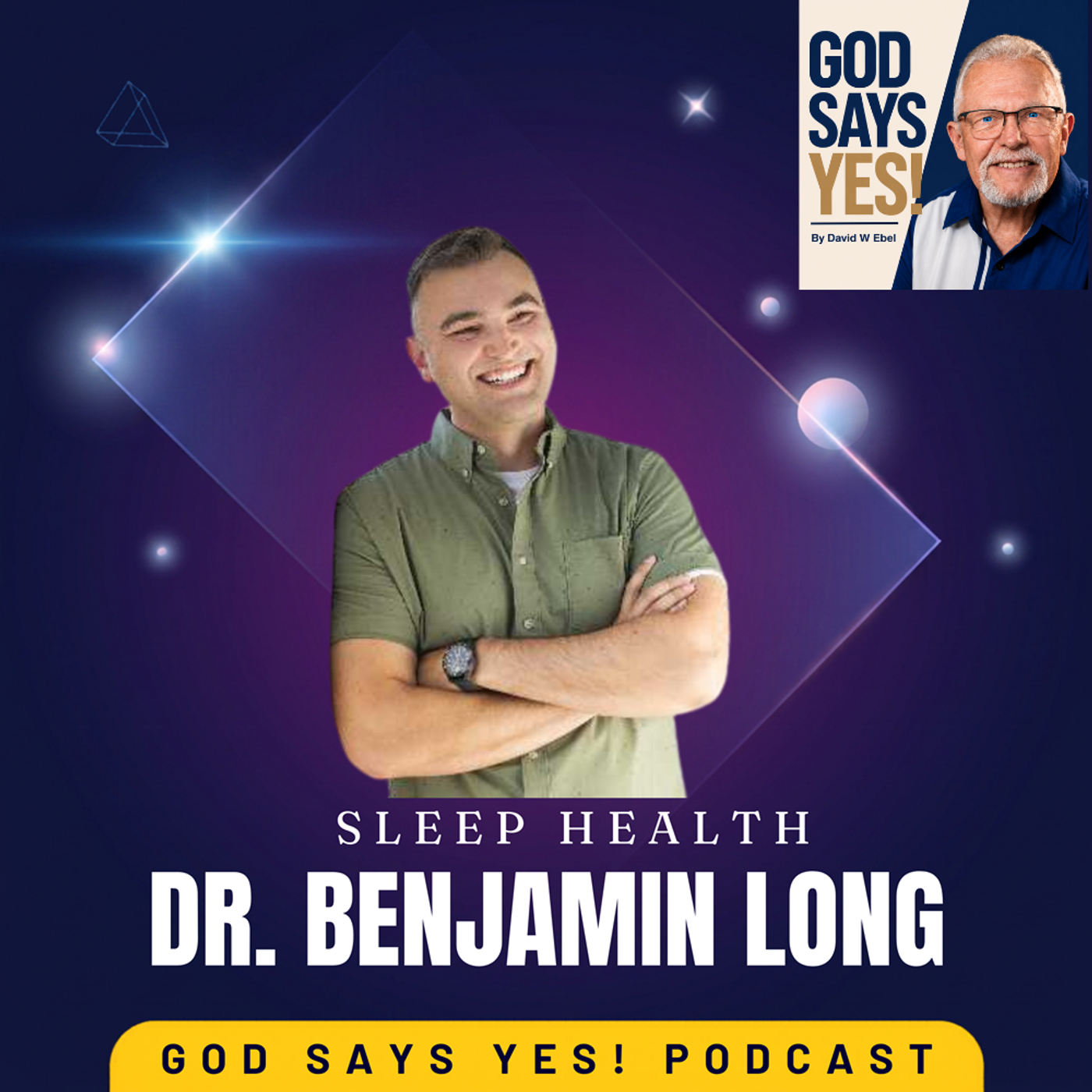
Dr. Benjamin Long


 YouTube
 The podcast episode features David W Ebel and Dr. Benjamin Long discussing the love of God, church hurt, Dr. Long's background, career, and interest in sleep medicine, the theology of sleep, and the connection to spiritual life, as well as sleep disturbances and God's intervention. The conversation highlights the unconditional love of God and the rise of sleep disturbances due to stress and other factors. The conversation delves into the principles of sleep, the impact of naps, and the importance of seeking personalized sleep advice from a sleep health professional. It covers the physiology of naps, the stages of sleep, the spectrum of wakefulness and sleep, the challenge of identifying sleep and wakefulness, training for effective napping, misinformation and expertise in sleep medicine, understanding individual sleep needs, short and long sleepers, the impact of circadian rhythms on sleep, and resources for seeking personalized sleep advice.
Takeaways
- God's love is unconditional
- Sleep disturbances are on the rise due to stress and other factors Understanding the principles of sleep and the impact of naps
- The importance of seeking personalized sleep advice from a sleep health professional
Chapters
- 00:00 Sleep Disturbances and God's Intervention
- 58:05 Resources for Seeking Personalized Sleep Advice
David W Ebel: Welcome to the God Says Yes podcast. You are welcome here. Welcome to another episode of God Says Yes. I'm David Ebel, I'm your host, and after fifty some years of ministry, I you know, I'm the guy that that â still is excited as the day I started with about the love of God. I'm I I can't wait to see what God's going to do next in the lives of people around. This purpose God says yes is about reaching people where they are, with no judgment, just as you is, the way you are. â w whether you've been hurt by church, whether you've been hurt by people, people betrayed you, belittled you, â broke promises, â mean family, whatever it is that's c caused you to pull back. And I'm sometimes church hurt is the worst because it feels like that should be a safe spot, even though actually the church was designed to be the emergency care ward of the body of Christ. And w and when you go with the ER, not everybody's thrilled about being there. Sometimes they come in kicking and screaming. And s and as a result, some of those people will be hurtful to the ones that are there innocently. And on behalf of the body of Christ, I apologize. I really apologize because you should be able to feel safe and comfortable in church. But in cases where that happens, remember that that's the person God is is is not the kind who fails. He's not the kind who hurts. He's the one who created you to love, custom made from the inside out. We don't look like the Sam on the outside because that wasn't the main concern. The main concern was from the inside out to be like him. So he loved you from the day you were conceived, and even before that. And and he's never stopped loving you, and you haven't done anything wrong or bad enough or stupid enough like me to to ha you know, I needed a savior desperately and didn't know I needed one. All I knew is I I was drowning, and I needed someone to do something. And finally, â the love of God. became like a â a li a a life preserver tossed out in the middle of the storm that was drowning me and God pulled me in and changed my life. And that's what I'm I'm praying it'll happen to you is that God will do in your life something phenomenal. Something that will change your life forever. That's the dream. And â so that's why we're here. And â with with that in mind, I w I want to â introduced to you â my my my good friend Dr. Benjamin Lung. He's a he he's an â a doctor who d wor does work with sleep and heaven heaven knows we don't get enough of that in the our culture anymore. So we're glad you're here. â Ben, welcome. Thank you for having me. I've been looking forward to it. â well tell us a little bit about yourself. Who are you? Yeah, I am â well I guess to go back far enough Third of six kids. â so earlier when you're like, Can I call you Ben? I'm like, I respond to pretty much anything. â you know, I my parents would just like go down the list and one of us was in trouble. So eventually someone would respond. so I grew up my dad â was bi vocational â minister, but also â was a pilot in the Air Force. â so you know, I like to tell people I there wasn't much room for stepping outside of the boundaries that were set for us because we had the â you know, kind of strict â punishment with like a very â strict lecture of why what we did was wrong was wrong. So and my mom â stayed at home and â raised six kids. but I've always known her my whole life as an artist as well. And so I often will say I'm the kid of a pastor and an artist. â and â I've been married, I will say since twenty thirteen, because I get myself in trouble if I try to say how long and that I pause too long. So so it's easiest just to say I got married in May of 2013 and that never changes. and â we have â one son, Oliver, and â living in San Antonio, Texas right now. Well, I'm glad I'm so glad you're here. â you've got an amazing ministry in the fact that you When people come to you, they need help. They desperately are asking for help or they or they don't come. â so you you were there to fix what is broken or to resolve something so that so that life becomes more sane for for people who are struggling. Yeah. And that's a phenomenal ministry. Hmm. Well, thank you. I appreciate you you saying that and seeing you know, medicine as a ministry. I think for some people it's â It seems like it should should be obvious, but I mean it it's not hard to see how medicine, especially in the American context, has become so much of an industry that we lose that ministry component and really the roots of of it as well. Well, I've had I've had a couple of doctors who would be like you in the in everything they do as a ministry. I've had a couple of other ones who thought they were God and acted like it. And they they did they may have made people feel better eventually, but they certainly didn't help the reputation of doctors in general. Mm-hmm. Because they â they just they there was no love in it. And we need we all need to be l loved and accepted and believed in. So â the fact that you you know enough to make sure that everything you does reflects God's love. â makes your ministry f â well our ministry first is we this is Jesus in us when this relationship is good then this becomes service and this service is what we do when we serve, we preach, we teach, we doctor, whatever we do. It's a direct reflection like a mirror. You know, this happens, so this happens. You cut the you cut this this the the hose on this one This can't happen because right the power source has been it's been shut off. So we always need to keep that open so God can love through us. Yeah, absolutely. And I'm I'm excited. So â What I'd love to do, you know, â let me admit up front, â I also have a problem with s sleep issues that I've had for most of my life. And you're the first doctor I've ever talked to. I could talk about doctors doc doctor and you know, sleep stuff. So I'm gonna be p I'm gonna be f absorbing every word because it's it's it's it's a truth to me that I've been waiting to hear answers for. So I'm excited about you being here. So tell us a you know, tell us about yourself. You what what's your story? Yeah, I so as I said, grew up a preacher's kid. â so very â blessed in one way as far as growing up in in the church and â hearing the gospel preached and â that being so formative for my life. â But then also, you know, if you know any preachers' kids, then sometimes to kind of use in a a medical term, it the gospel can be a little bit inoculated where you you hear it so often that you start building this immune response to it. And it's it's easy for it to become, you know, â familiar, common, or or not as miraculous and beautiful as as it is. and so so I've I my like faith journey, I was saved at a very young age. I was around like five years old when I â first walked the aisle to accept Christ as my Lord and Savior. â and so I think you know some good things with that as I've already alluded to but some â chronic issues with with doubt over my â salvation, what that meant. And I think a lot of that was just normal developmentally, you know, just trying to understand what what is the full extent of this decision I made, you know, when I was five years old compared to once I'm nine or then thirteen, then seventeen, then so on and so forth. So and for my career, I would say â a lot of The inspiration and my career direct trajectory really came from my family. My grandfather was a pediatrician â in Columbus, Georgia for a long time. And growing up and seeing his life and his â services ministry was really inspiring to me. you know, we would be out and about and it wouldn't be several minutes before someone would be like, Dr. Sizemore, and would like come up and, you know, kids kind of Hugging them or families, you know, hanging off of them or things of that nature. And â you know, he was always so kind and so generous with his his time and the the people that he served. â but then â you know, my growing up, my dad being in the military as well as in the ministry, I just tell people I kind of just like smush those two together. So for a large portion of my â medical. career, I have been active duty in the Air Force. And so that I've been helping military families, â so children with sleep problems, but as well as service members and their spouses and things of that nature. â because compared to the civilian population, there's a a significantly higher rate of â sleep disturbances in military personnel and military families. So it it comes with its own kind of unique Issues and things and barriers to sleep that â you don't necessarily think of in the civilian population. â and really my my journey at seeing my work as a ministry and â becoming curious at what does the Bible have to say about sleep just started even as I was in my sleep medicine training. â for people who don't know, for physicians, you do You know, four years of undergrad, four years of medical school, and then anywhere from three to eight years of post medical school training, â to get the experience that you need to be a practicing physician. And so I was in my last year of my pediatrics residency to become a pediatrician when I realized that this this wasn't quite where I â felt God was calling me to. And â you know, through â you know, just in God's providence that I was able to rotate on â sleep medicine elective. And from my very first patient, my very first day, it just clicked and it felt like the right place for for me to be. And I just really love, you know, the fact that everyone sleeps. So it's an interesting thing to be an expert in because whether from a medical perspective, if I'm talking to a gastroenterologist or a cardiologist or a psychiatrist or â any number of things because everyone sleeps and sleep is so important for our health that it has interesting intersections with â pretty much any specialty and subspecialty. and but as I was training I realized that there was there's something that â felt like it was missing in what I was learning about sleep and receiving About the scientific knowledge of sleep and the practice of diagnosing sleep problems and helping people, that on one side, I always get a spiritual history with my patients and I ask them, you know, about their faith backgrounds and things of that nature. And so what I noticed from just my patients was that a lot of people would say, I'm a Christian. They say that prayer and Bible reading are important to their faith. And yet when I ask how they respond to their sleeplessness or insomnia, then very rarely did anyone give me an answer that drew from their faith. â and so â so that was like a an interesting kind of observation. And then the other thing is I was learning about, you know, treatments for insomnia, but at the same time I'm reading my Bible and reading the Psalms, and you There are some psalms that it the psalmist is awake and they are dealing with such â powerful emotions that it's preventing them from sleeping. And I â felt like, okay, there's something and like what I'm learning about how to treat insomnia, and then what I'm reading in the psalms, there's something that's like resonating between these two things. And I just didn't have the framework or the concepts to be able to bring those two things together. So that and the observation with my patients is what kind of led me on this journey to have an interest in theology and specifically â what the Bible, what church history and Christians throughout history have thought about sleep. I I'm just so I'm just sitting here just soaking it up. You're I I was it I had my eyes closed even just thinking about trying to to to get to wrap it wrap it around in my head because this is something I've I've been eager to know and and really wanted to to to remember every word of it. â you â now you you you you help d different people with different parts to it. Is there is it is it Is there a high stress area that more people are struggling with it in than others? Yeah. I would say, you know, we know that sleep disturbances in general just on a rise when we look over the across like the American population or different subsets within â America. â and stress is a huge one. You know, if you are stressed out, whether that is personal, whether that's financial, whether that's â circumstantial. Whatever those things may be, â those are what we would call precipitating â factors that â that that stress pushes you above an insomnia threshold. So all people will have some amount of predisposing factors. So there's some people who they they don't have as high to jump before that they're having difficulty sleeping. And that might be â you know, something you can't modify. We know that. Women tend to have more sleep disturbances and insomnia issues compared to men across the board. â and then there are some things you can modify, like where you live. You know, if you're in a neighborhood that is surrounded by poverty or more violence, then â we know that that is an independent risk factor for having difficulty sleep, which would make sense if I'm lying in bed and I'm constantly afraid for my safety. Then that's going to be more difficult if I'm in a bed somewhere else where safety is more assured. So there's always these like predisposing factors that you may or may not be able to do something about. And then you have the precipitating factors that jump you above the insomnia threshold, which I just tell all my patients to live is to experience precipitating factors. So it's not a matter of like if they're going to happen to me, it's when they happen to me. What do I do about it? And so then that leads to the last P in this three P model. which is â perpetuating factors. And so that is how we respond to sleeplessness. And we can either have behaviors that are going to help us in the long run or hurt us in the long run. And so the biggest two behaviors, if anyone who's experiencing sleeplessness and is listening to this, the biggest two behaviors that you can immediately do something about that is going to kind of help you out in the long run is actually don't sleep in and don't take long naps. â which â that sometimes I lose people there because they're like, Dr. Long, I love my naps. Like, what are you doing? You know, like I can't make it through the day without â you know, taking some kind of a nap. And so the sleepless night rules that I talk about in my book, â which is a form of the stimulus control instructions that you get in cognitive behavioral therapy for insomnia. â and there I say resist sleeping in and taking naps. So I tell people, hey, I didn't say like eliminate it, you know, they're Everyone's season is so unique and so contextual that â you know, I I might have to draw upon, you know, taking a short nap or something in order to kind of help me just get through my day or whatever season I find myself in. And so a lot of my work is hearing people's stories, hearing what their unique barriers are to their sleeplessness, and then just trying to find solutions that will work. â for them. So so it is in in one part, you know, really make sure I'm hearing the person across from me and and seeing them as unique individuals. â and to a little bit of expectation management too. You know, like I often tell people, I am probably not going to get you to nine hours of blissful sleep, you know, whether you wake up and you're fully refreshed for your day. I would love that. And I I hope for that sometimes because I would be wrong when I say I don't have people who respond with very robust responses to interventions. â but â you know, going back to that three P model and then thinking of it from a Christian perspective, we live in a f in a fallen world. â the world, even though God says in Genesis in the beginning that what He's created is good. You know, and they're that goodness still â is pr present, but we would be fooling ourselves to say that that hasn't been impacted by the effect of sin in the world. And not just individual sin of me doing something bad, but also on a larger perspective, us doing bad things and how that impacts persons and people. â and so so you know, from that perspective, I'm like. Man, amazing sleep â isn't promised to us anywhere in the Bible. â but how I respond to sleeplessness, there are some tools I have in my my toolbox. And also no amount of sleeplessness cancels out the goodness of God. And so that's what â a lot of my interest in studying a theology of sleep is is. When people are suffering from sleeplessness. And that is a true suffering. Sometimes that's part of the equation of is convincing people this isn't normal. This is something uniquely â a suffering that God cares about. â but it sets a it makes you so short-sighted because all you can think about is the sleep that I'm not getting. â and so then what we miss out on is the not only an invitation to connect with God when we're in the middle of that suffering. â but we we miss out on Sowing deeper into our heart the truth that God is good, that he's â you know compassionate. â he his love for us is so abounding and â so far beyond anything that we can even experience as love between humans. â and he is very, very, very, very, very slow to anger, even though â he â you know arguably I think from our perspective there are things that like you should get more angry. No, like there are really there are really like deep hurts in in the world that we see it and then in our own self-righteousness say, I'm angry. This is the right thing for me to be angry about. â And then that just highlights the reason why we are not God. â And so so All of that is part of our experience of to sleep or to not sleep. And I tell people, sleep is part of your spiritual life because all of life â is a gift. And so sleep specifically is this very interesting gift within the biblical narrative that â you know oftentimes I point back to the first two times that you have. The word tarima â in the Hebrew, which is usually thought of as this deep sleep. â and the first two times it's used in Genesis is with Adam and then later on Abram, who eventually becomes Abraham. â and there's a lot of parallels between these two stories when it comes to sleep, because in both situations, God sees that there's something not good with Adam and Abram. For Adam, he's alone, and for Abram, he has no descendants. And so then in the story of how God works in that not goodness, you know, like in what is wrong, sleep is present. And then after the sleep, â Adam is blessed with Eve, and Abram is blessed with this promise of â having descendants, and is a whole, you know, we could spend a whole hour talking about â that imagery there of â seeing the The flame walking between the sacrifices and â God making this promise to to Abram. And so, you know, sleep is not the main point of that story, but I think it forms our thought around sleep and it highlights that I cannot fix those problems. You know, like no amount of striving by Adam and Abram, â We're not going to be able to fix their current situation. Like God had to intervene. â and so sleep is this beautiful gift that highlights our creaturliness, our vuln not only vulnerability, but our need for God to move â and to provide for us, to sustain us, and and all of those, those things. And so as I study about sleep in the Bible more and think about it in connection to my work in sleep medicine, you know, the more I just see it as sleep as a gift that it's something that we have to be in a posture to receive and less about my need for control. â you know, because that's that's why everybody comes to me. I'm not sleeping and you have a You've got a label on that says sleep doctor. So fix my problem for me, doc. And and surprisingly, I would say a lot of people are really surprised because I am since I'm a physician, they think I'm going to prescribe them a sleep aid. And that's usually actually one of the last things I do. Because one, I I know the research. I know that â is pretty narrow range of issues that Someone is going to have a continuing benefit of being on a sleep aid at â a a nightly use of needing that every single night. Not to say that that's wrong or that there are not people who who need that. That certainly definitely is not the case. â because of our brokenness and the different things that people experience, sometimes a sleep aid is what's kind of needed to help, you know, build that bridge so that way they can get to a place where it's easier for them to receive that gift of sleep. â but I would say if you look across probably me between my colleagues, whether it's in primary care or neurology or psychiatry or things of other natures, I probably write way less sleep prescriptions because oftentimes there are so many other things too that we have to make sure we are addressing. â in a lot of ways I see sleep as a puzzle. â and and so that sleep aid, you know, that's that's kind of part sometimes one piece of the puzzle. â but other pieces are is there something else that's fragmenting your sleep? What's fragmenting your sleep? You know, we've talked already about stress, but if you have uncontrolled sleep apnea, you have uncontrolled restless legs, or you have other kind of chronic conditions that are not being well controlled, all of those things can be things that can fragment your sleep as well. So that's another kind of piece to the to the puzzle of things. And and you know, I think another thing that's just coming to me now too is when we think about it from a a Christian worldview, â there are often points within the biblical narrative where God needs someone to be awake. â you know, you think of Samuel's call and â Samuel waking up and thinking it's Eli and is like, â let me run to Eli. Here you called for me, you know, and then Eli is so blind to what the Lord is doing, he's like, â go back asleep. You know, and then that happens over and over again until finally Eli gets the picture of, â this is this is the Lord. And so then Samuel finally â has the words and the understanding to say, here I am, Lord, you know, like I'm your servant, speak to me. And I have heard sermons where people will say, anytime you wake up, you need to be like Samuel and God wants you to be awake. And so you got to jump out of bed and get on your knees and be like, God, what are you trying to to say to me? and â early in my life I was like, that's a weird interpretation. I I don't agree with that. â and now I've kind of swung maybe closer to the middle of I think that there is a lot of wisdom â in that. â you know, we when you think about sleep, you probably might have heard of sleep cycles. So we go into kind of deeper sleep and then we come back up and it's this waxing and waning kind of pattern. So it's natural for all humans to wake up several times in the night. And from a sleep medicine perspective, we Get concerned if you have significant difficulty falling back asleep. So if you wake up, you turn over, and then you're able to fall asleep within a couple of minutes, great, that's totally normal human physiology. â the concern is when â you wake up and then you have a real struggle to be able to fall back asleep. And so, so I think that there â you know are moments where â you know our our sleep is not the highest prize, the highest good in our life. And so God will â interrupt that in order to â continue his will. and the more I talk about a theology of sleep, the more I hear stories of people who have â moments where they wake up and they feel compelled to pray for somebody and then they find out at the exact same time that that person is getting shot at or has some other kind of life-threatening event or problem. â and so And in that mystery of how God works, you know, â it it seems pretty evident that the spirit is working in that person to be able to â engage in prayer. And as Christians, you know, we think that there is â a role in prayer in our lives and in the spiritual life. â so all that to say, for the person who's experiencing sleeplessness, the last answer that they want to hear is, well, maybe God is. â and is well, certainly they don't want to hear God is causing that sleeplessness. and â that can sometimes lead down, you know, â a rabbit hole the question of like, okay, is this natural or is it supernatural? â and I think when we when we have those conversations, â that that tends to be â more of of a modern â distinction compared to you what the biblical authors would have said. You know, like if we had asked, well, did this happen because of the natural world or did this happen because of God? I think most of the biblical authors would look at us like, what? You know, like that that doesn't make sense. There's no distinction there. â and so I often quote and we'll think about Psalm seventy seven, where the psalmist talks about it he feels like that you hold my eyelids open, you know, like I'm in such sorrow that I can't sleep. It you Literally like God is holding my eyelids open. And â I think what that psalm and other points within the biblical narrative show us is one, like we've already said, not to idolize sleep or to think that it's the highest good or that God can't interrupt it, but two to see the that God is always wanting to connect with us, that the sleepless night may be an opportunity and invitation to connect with God. in a way even more so nowadays where we have so little margin to be able to devote to the the good things within our spiritual life or our own development and sanctification as Christians. â and so it might just be God's like, hey I I've got I've got something for you. You know, like we we need to connect about something, whether that's a conviction of something that needs to be confessed or someone that needs to be prayed for or you know that God just wants to to be with you. Like the part of my book and part of my thought around sleep is just opening that as an opportunity â and allowing God to to work and meet you and your sleeplessness. As powerful. And I'll tell you when you you were going through all these steps, the you you you said one thing and went right past it. I'm gonna back up a little bit and ask what a what is a real a short nap look like? Yeah, absolutely. â and so so for my sleepless night rules, I already said the that fifth one. So I'll just review those real quick before I answer your question. So the first is cease before bed and wait to feel sleepy. And then number two is rise out of bed if you can't fall asleep. Number three is connect with God and wait to feel sleepy. And then number four is repeat steps two and three until you actually fall asleep. And then that step five is resist sleeping in and taking naps. And so obviously if â someone just had to sit in front of me, I just say those five things. And then they're like, Wow, I have the perfect knowledge to be able to fix my sleep. Then I, you know, my job would be way easier. And I could arguably make way more money, you know, and see more people and help more people by just saying those five things. â but you know, as we've said, it's the nitty-gritty. It's like, okay, so you're saying resist resisting naps. Well, what does that actually mean? â and so then my Book is actually centered around those five sections. And so then dives into how does this look like, you know, in this step, how do I get a little bit closer to that? Whether that's some kind of educational piece or something more motivational or devotional. And so to get back to your question for that resisting sleeping and taking naps. So one of the â ways that you can use a nap to your benefit is if you keep it closer to the range of around 15 minutes. It's kind of the the sweet spot that I typically say. There's Research and the problem with research on naps is sometimes people will test 10 minutes, sometimes people will test twenty minutes and fifteen minutes. So, you know, there's always that question of like, okay, is there some kind of optimal time? But thinking about it from a physiological perspective, we know that as you enter into sleep, â you go typically if you're typical development should enter into non rim one, unless you have narcolepsy or you're a newborn infant, then oftentimes they enter sleep through RIM. But for most people, they should be entering into non-rim one. And then â non-rim two is where is kind of the lighter sleep where you spend a significant â portion, â close to half of the time that your sleep is going to be in that stage. And then you'll dip down into stage three, non-rim three. You might see some older literature. We used to break it up between three and four, and now we've just lumped it together to say three. And then the final stage that we typically talk about sleep in is RIM sleep. And that's the eyes are moving where you're dreaming and things of that nature. And so for naps, we don't want to get into that real deep sleep. Because when you come out of a non-rim three, â when you're not supposed to, you can have a lot of what's called sleep inertia. And so that's when you are waking up and you feel super groggy. Some people will even describe it as almost feeling like they're drunk kind of a thing. â because you have you s have set some alarm to say, okay, I'm gonna, you know. Only sleep for 40 minutes. So, but your your body's not on that same time frame. So, you know, you you're trying to interrupt your sleep at a spot when your body is not supposed to. â and so so then it you when you wake up out of that non-rim three, you feel really groggy and not refreshed, and you don't get any benefits from the nap. So if we can shorten it so you don't even enter into that, that's why we usually say 10, 15 minutes. There are some people who will say, Five minutes very famously. what's his name? It was a famous artist who used to close his eyes and l hold a spoon and then like have a you know pan or something underneath it. And so then the moment that he would fall asleep and let go of the spoon and kind of make a noise and would wake him up. And but then reported that he had enough of a boost of an energy that he benefited from that nap, even though arguably it was even less than Five minutes. So probably in reality, it's different for different â people. â some of that is going to be your expectation, what you can get from a nap. Some people hear nap and they think I should be deep sleep. And I tell often tell people you this is not like a drooling, you know, like I'm super dead to the world, out of it kind of sleep. A nap should be lighter sleep. You're not getting into that very â deep sleep. â and so The problem â is that the other issue with sleep is kind of that line between awake and asleep. We like to think of it as a light switch that I'm awake or I'm asleep, but it really is more of a spectrum. And there are some people who they can have what's called alpha intrusion, which is when you're you are awake and your eyes are closed. If I put EEG leads on you, part of the back of your brain Has a very specific waveform that we call an alpha rhythm, sometimes called a posterior dominant rhythm. And that is characteristic of awake eyes closed. And so that should diminish as someone falls asleep. But we know that there's a certain subsection of the population where alpha rhythm is more active throughout their â sleep. And sometimes that is associated with things like PTSD. It can be associated with traumatic brain injuries. It can be associated with a variety of psychiatric disorders and things of that nature. And we still are trying to figure out like, okay, well, what is the significance of this? Why do we have â this rhythm that tends to kind of like bleed into people's sleep? â and so then the next layer beyond that can get pretty philosophical and pretty dualistic real quick in that. I often my theory and kind of what I think a little bit is â when I see an alpha rhythm, it's almost like the mind is awake, â but the body is asleep. So saying that I could put you into the sleep lab to take a little nap and put these EEG leads on, tell you to fall asleep, and then come in once I see your brain waves has said that you are asleep and wake you up and be hey. Wake wake up, you just fell asleep. And so for people who have what we used to call paradoxical insomnia, they'd be No, I didn't. You know, like I was just laying here. And there's there's something that goes on within some humans that â they have difficulty understanding when they have fallen asleep. Whether that is I'm hypervigilant, I'm very, you know, overactive. So if you think from a military population, I am trained to be vigilant and on the ready and prepared for danger kind of a thing. â versus â if I have, you know, grown up in places of violence or experienced traumas or things of that nature, sleep is not safe. â and so I don't want to go too much on a rabbit trail there. I'm oversimplifying the problem a little bit. and I'm not saying that the specific brain, you know, waveform is is measuring our experience of Consciousness. So I think that people can take that into corollaries and say, you know, start making conclusions really quick. But all that to say, â some people have really a difficult time understanding when they have fallen asleep and when I have truly started to get some of those benefits from a nap. And so what I help people with is train them how to take a nap. So we've already talked about length. â you know, if someone says, â yeah, I take a three hour nap, I'm no. You take a three hour sleep. You are sleeping, you know, like you're not really like taking a nap. And so you're not getting the benefits from a nap because you're waking up at groggy points or you're sleeping kind of too long. And so if there is a little bit of that performance anxiety of like, â no, I'm anxious about trying to fall asleep or a missed expectation, or if someone truly is that paradoxical insomnia where they have a difficulty time differentiating between that moment of being awake and being asleep, then oftentimes I would just say. The expectation is set an alarm for 20 minutes and you lay down, you close your eyes, and you just take a big breath. Don't even think about, you know, or gauge the success on if I fell asleep, yes or no. What I want you to do is just close your eyes, take some deep breaths, and then when your alarm goes off, then kind of check with yourself and be like, okay, how do I feel? Again, expectation. Naps are not supposed to be like, I'm on top of the world and I can like do anything and now I have all this energy. You know, like that's kind of like a poorly managed expectation because that's not what naps are supposed to do. It's I might feel like not as sleepy as I once was, or maybe at my baseline, or a slight little energy boost, but it's not going to simulate having a full night's rest in the matter of, you know, five, 10, 15 minutes. â and so then from that, then It takes away that question of did I fall asleep or did I not fall asleep? And it's more about the how do I feel after laying down. And so when people start practicing this, that's the other component to it, is you actually have to practice, you know, put this into place. â I very rarely, if ever, off the top of my head, have had someone who comes back and like, I don't feel any benefit at all from doing that. You know, like most people are like, Yeah, it's not what I expect. I still don't know if I fall asleep, but when I, you know, kind of like think, reflect how I was feeling versus how I am feeling, most people see some kind of like positive benefit. Okay. And so so yeah, that was a long-winded explanation. Sorry. So Dan, â if may me I think one of the things I've had misinformation given to me about what naps are. Mm-hmm. â and I I never thought that closing my eyes and just resting was considered a nap. I thought you had to get into a coma kind of thing to be sleep for an hour or more to for it to be considered a a nap. So â that means my my expectations are wrong based on faulty information. And I'm I I I imagine I'm not the only one who's been there, done that, got that T shirt. Mm-hmm. And I think also it's a little bit of the expertise in the field. Sleep medicine, as a a sleep medicine physician, â you know, when we were talking I was just talking about the staging of sleep, it was roughly around like the nineteen fifties or you know, maybe sixties that we even discovered that there was a patterned brain wave to sleep. And that's what really kind of set off â the field of sleep science and therefore sleep medicine as well. â especially in â pediatric sleep, that's even â there's kind of less â history there as well. So, so for reference, in America as a sleep medicine physician, to practice sleep medicine, â to go through â at least a year of structured curriculum where you're getting deep knowledge about sleep science and exposure to patients and experience. â That has only been a requirement since 2012. Prior to that, yeah. Prior to that, all you needed to do was read a certain number of sleep studies and then, you know, study a book, take a test, and then you can call yourself a sleep doctor. And so you can imagine you might get someone who is really experienced and very knowledgeable about sleep with that old kind of criteria, or you could get someone, I call them sleep apnea doctors, where â I will read a sleep study. I will tell you if you have sleep apnea or not. â but insomnia and all this other stuff or whatever, like I nope, I don't deal with that, you know. And so then unfortunately, then the patient suffers because they the we didn't standardize, okay, what does this mean to call yourself a a sleep doctor? and since that's so recent of 2012 for that cutoff, there's a lot of people who were grandfathered in as well. And I will say, you know, like. Many of them excellent physicians, many of them excellent at sleep and forerunners and you know, discovered a lot of things. So not like that's just someone's, you know, older practicing means that they don't know what they're talking about. That's not true. â but just to say, I think what you've experienced even now, so in a age of online and social media and things like that, and so much misinformation that can happen there, there's still a lot of stuff that we're trying to â kind of battle, I guess, with that. That makes sense. â so for a guy like me who's had a a history of sleep problems, I usually have to wait until I'm absolutely exhausted before I can lay down. Otherwise I toss and turn. Is i you know, I would imagine that's not I'm not the only one who's like that. But â I've never had anyone ever explain anything like what you're talking about today. I have to learn how to apply that. Mm-hmm. Mm-hmm. Yeah, absolutely. And that's a very common thing for a lot of people. Two expectations there that I'm hearing. One that many people face is I have some number of hours in my head that is adequate sleep, and that's when I need to sleep. But then you think back to, you know, before we had clocks and watches and things of that nature, like people just laid down when they were really sleepy and then woke up when they were. you know, refreshed and ready to kind of go for the day. and so even though we have this normal range of like seven to nine hours, sometimes that can get into our heads a little bit â if we're not meeting that. And the other thing with seven to nine hours is it's individual and it is a bell curve and that like most people fit into seven to nine hours, but there are some people that are truly short sleepers that only need five to six hours of sleep per night. I am not a conspiracy theorist. I don't really ascribe to a lot of those things. But if there was one conspiracy theory, I guess I would say it's that I think the people who have been really successful and have created a lot of the things in the world are probably short sleepers, you know, because they just need five, six hours. And if you're a true short sleeper, you are refreshed for the rest of your day. You might have a little bit of a lull. Everyone tends to have that kind of in the early afternoon, midday slump after lunch. â But you you don't necessarily feel like you're dragging or you need a nap or things of that nature. And so if you you get five to six hours, you don't need energy drinks or anything to help you get through the day until you fall asleep again, then that's when I start having that thought of maybe you truly are a short sleeper. And so I bring that up because if I'm a six-hour person and that's all I need to be refreshed, I shouldn't be shooting for eight to nine hours because I'm actually shooting myself in the foot because my body, we know that there's A pretty strong genetic component to our total sleep duration as well. And so I'm actually hurting myself if I have this information of like, â well, seven to nine hours is normal, even though I feel totally fine if I get six hours, then I need to try and get up to â eight hours. â and so what you're doing is then you're actually stealing a little bit of that sleep pressure from yourself. You know, your their your body has only so much sleep that it â can produce or that you can get in a 24 hour period. â but it will give that out if you try to take those, you know, withdraw those things from the bank. And so â one way that I've heard this talked about is the pizza pan and â pizza dough. And so if their sleep that you get is a certain amount of pizza dough, if I have a six hour supply of pizza dough But my pan is an eight hour size pan. Then as I'm trying to stretch that pizza dough out in order to fit the size of the pan, I start getting all these rips in the dough. So that's very similar to what happens for people with insomnia is I'm spending too much time in bed. And it's because I'm beyond what my body actually needs. And so I'm not able to have this one consolidated nice sleep period. And so one of the primary treatments for â People with insomnia is then decreasing the size of that pan to getting it to fit better with what your body specifically needs. â and so then that way, again, it's not about getting you to some perfect number. It's like, okay, what how how much sleep is your body getting? And then let's try and see if we can consolidate that and then see how you feel after you're getting those stretches. And so for someone who is a true short sleeper that only sleeps six hours, then That's going be very different for someone because on the other side, I have long sleepers. And so there are people who really, if they don't get 10 to 11 hours of sleep, then they start having a lot of symptoms. But then our society that we live in, it's really hard for them to have careers and to progress and things of that nature if I'm also roughly having to spend almost half my day asleep. I'm I'm one of those people that is grateful for for if I get to five hours I'm I feel like I've been it's a treat. And most of the nights are f are f â about a four hour night. Yeah. So with the information that I'm supposed to have an eight hour night, I always feel like I've been cheated. Mm-hmm. Mm-hmm. Right. Right. And it's some you know, like and so truly some of that is a little bit of that expectation management of like, okay, maybe you know, instead of always like striving to reach this other number. Let me just see like how I'm feeling based upon you know like the numbers and the time that that I get. â and so that â For if you're having difficulty â falling asleep, exactly like you said, you're like, I have to be really tired, otherwise I toss and turn. That's perfect. You know, that first rule that I have, cease before bed and wait to feel sleepy. â part of that is to my go getters and my type A people who are like, I'll sleep when I'm dead, and then they think they can just like do whatever and then like almost like a baseball player who's like sliding into home, I'm just gonna slide into my bed and fall asleep and everything should be fine. So that's that's a totally different problem that I talk to a lot of people about. But another thing is that it just may not be time for you to be sleepy and fall asleep. So not only is our duration of sleep unique to me in individually, but also the timing of the night can be unique for some people. You you might hear people talk about night owls or morning larks, and that changes throughout lifetimes for a lot of people, but sometimes that can be really delayed. So if I'm a true night owl, â in sleep medicine, sometimes we will then diagnose that to what's called a delayed sleep wake phase disorder. That's when someone's circadian rhythm, their body does not start feeling sleepy until like 1 a.m. And and if they are allowed to fall asleep at 130 a.m. and then sleep until, you know, for my teenagers that I treat, sleep until like 11 a.m., they wake up and they feel fine and they have no problems. They don't need any energy drinks and they're able to get through their day and do everything that they need to. But then we live in a society that's nine to five, and that's not conducive to that, or school schedules or start starting times, things of that nature. â and so, but what happens to a lot of these people is they get labeled as insomniacs because they can't fall asleep. And those are two totally different treatments. If I have a delayed sleep week phase, then we use both light and medicines to help see if we can adjust your you to earlier or for people who are on the flip side who are advanced and then they need to be later. â Some people respond to that really well with medicines and lights. And s some people they can only move maybe like a short 15, 30 minute increment, and that's all that their body can do. So it really is unique â to each person. and so that's why the stimulus control instructions will often say, like, okay, wait to feel sleepy, because no amount of just lying in bed and wanting to be asleep is going to make you fall asleep. Like every insomniac knows that. â And so then that's why you have to actually wait until your body is ready. â so on the one side, knowing what your specific needs are, but on the flip side, for a lot of people who might be listening to, â not thinking that I can do whatever I want in my lifestyle, in my careers, â or fill up my day with as much stuff and think that I should also be able to be like a machine and immediately be able to switch to off. So it's also a matter of that ceasing of. actually â you know living into ordered creation as God has ordered the universe to be waking and sleeping in night and day. And so actually like drawing a line in the sand and acknowledging God you've got me through this day. And so now I am crossing over and preparing for the next. Makes sense. It's a that's a lot of information. I you know I'm I'm thrilled. â obviously We c we could go another two hours. There's there's enough information. â but â for for guys like me that that have a a a documentable sleep problem, â we we we may be better off to find someone who does what you do instead of trying to get our advice from what mother always said or what the internet says, all that kind of stuff. â the doctor I have my MD g â gives me sleep meds. But he also takes care of a a zillion other people. And so I â me I'm just I'm just a fifteen minute work part of his world. Yeah. I I think I probably do better now that listening to what I am hearing today, I need to find someone that does what you do and actually spend time with them and find out what what will work for David instead of what will work for the general population. Yeah, absolutely. I think some great resources for that for people. The biggest one is if you have a sleep health professional that you have access to. for many people, if anyone finds themselves in the military healthcare system, the military, because it is such a rampant problem, has trained a lot of sleep psychologists and â sleep medicine physicians and really have a lot of â resources for that. So definitely encourage people to seek that out and not necessarily just before I'm about to retire. â and then â but on the outside, you can often you know â Google like â like sleep psychologist or â there is a cognitive behavioral therapy for insomnia is a lot of what I pull out of. So people have heard about CBT for depression, anxiety, and things of that nature, but there's a very specific form that's just for insomnia. So oftentimes if you Google, you know, like cognitive behavioral therapy for insomnia and you know search for â someone who's trained in that, then they will be given a lot of the tools that I've spoken from and be able to walk with you through that. Cause some people just need that person to have a little bit of that accountability. Some self-help resources, one I really love is called the Insomnia Coach app. So that's the same thing. You get a lot of the same information. â and then it has an interactive sleep diary where you put things in and then it will give you a sleep prescription of like based upon you, how much you say you sleep, then â you know, I'm going to adjust your time in bed so that way we can try and consolidate it and give you as much refreshing sleep as as possible. â that's a fantastic resource, originally made by the VA, but you don't have to be military or ex military to benefit from it. And it's what I use a lot of times 'cause kind of what you were talking about of I only got a a a fifteen minutes if I'm lucky in front of my doc for them to try and kind of deal with my my problems. And so in a lot of ways I see the Insomnia Coach app as â kind of a bridge for that. So that way it provides that education. It helps walk people through a lot of the things and can do those some of those things in my absence. â and then the final thing would be like the book that I've written, the Sleep Habits Journal. And so then that brings in more of the spiritual life, the Christian worldview. And so I try to bring together that cognitive behavioral therapy for insomnia, but also like, hey, us as Christians, we have a unique claim about the world, who has made the world. And â that also extends to our sleep as well. Absolutely. â we are getting close to the end of the normal time together. I think it we should probably plan on another visit at some time in the future. â have you come back and and and give us some more information. I think there's there's there's people wanting it and it it's good that we can make it available to them. â but â if you you want to t tell us a little bit about your books in more detail we â so that â when in pub when it's published your â my t my engineer will put a picture of your book next to your head so they can see what it looks like while you're describing it. So would you go ahead? Yeah. Absolutely okay. It's actually already published. Sleep Habits Journal Practices, Prayers, and Devotions to Ease Your Sleepless Nights. It looks like this minus the sticky notes that I have on mine. and it is really my attempt to try and bring together â what I've learned about treating insomnia, but then also from that Christian worldview. The easiest place for anyone to find it is if they just go to sleephabitsjournal.com. That'll take you to my website and it has all of the different, you know, retailers that you can purchase them from, whether online or in person. and if you were I know there are some people who are like, I like to go to a bookstore and just buy my book in person. I don't want to buy it online, then Barnes Noble. I know that there are many Barnes Nobles across the US that are stocking it. So you can always search there. Fantastic. Well, I am so grateful you came and â You know, is your website say it again slower so we can so people can absorb it, please. Yeah, absolutely. It is sleephabitsjournal.com. I'll say it one more time. Sleephabitsjournal.com. I know that I write slow, so I I figure if I write slow, maybe someone else does too. Right. This is this has been amazing and â I â we usually as we close I invite our our guests to give us a golden nugget. Something that we could mull over the next week or so. â so that what we we learned here we can carry through into our lives beyond the interview. Well would you w you have a a nugget for us? Yeah, I would say the nugget that I always come back to and that I am continuing to explore is â more about discovering who God is and that we worship God who and The Bible says never grows weary, never needs to sleep, does not sleep. And Psalm 121 says that he never slumbers nor sleeps. And yet, paradoxically, has experienced sleep and sleeplessness in Jesus. When we think about Jesus awake in the Garden of Gethsemane and just in such distress ahead of his crucifixion, and that in the life and death and resurrection of Jesus, and now by the spirit, you know, is with us in our own sleeplessness. And so the fact that I worship a God who not only just like loves me, but intimately understands what it means to experience the suffering of sleeplessness. And the fact that in any moment in my night I can pray to God and know that He is as, you know, close to me in the spirit as the disciples were as close to Jesus, if not more so. â and know that God understands my suffering. Like that is an amazing nugget that I often kind of come back to to fantastic. Thank you so much for everything. â I I know I learned a lot, and I'm sure our viewers will as well, because they personally absorb it. You may have to watch it a couple of times to get all the goodies out of it, but it's worth it. And I'm I'm grateful that you you you know, it'll be seen on it'll be heard on Spotify and it'll be seen. in all the normal places that that that is available. So I'm hoping a lot of people will get the opportunity to absorb it. So as we as we close our time together, â we I always pro pray and then give a challenge. So let's pray. Father, thank you for this chance we've had to be together. We ask that you would do take something that we've said and done and bring you glory. Draw people who need you to you and give them strength and hope and help If they're if they're struggling with their sleep issues, Lord, reveal yourself to them and guide them through your Holy Spirit to the help they need so that they can be they can be fully rested in you. Bless each of those that have been viewing and listening, and â those that are seeking. Lord, meet their needs where they're at, be glorified in their lives. And we ask all these things in Jesus' name. Amen. Amen. Challenge is always seek after God, he will be found. You want to know him better? Jesus is the way to God. Seek Jesus, he'll show you who God is and how you can gain and grow from it. Be blessed, go forward and seek. This has been the God Says Yes podcast with David Ebel. Connect with David, email him at GodsaysYespodcast at gmail.com. You can get his latest book, When the Doctors Say No, God Says Yes, at Amazon.com.


